What Is Home To You?
“When I think of home, I think of a place where there’s love overflowing”
Years ago I rendered a speech about HOME and that line from the song has been my intro. For years, the words of that song has always been how I believed what home is – a place where there’s love overflowing. After attending the launch of Homes We Carry: Voices From Life Beyond Borders, they carried a different weight
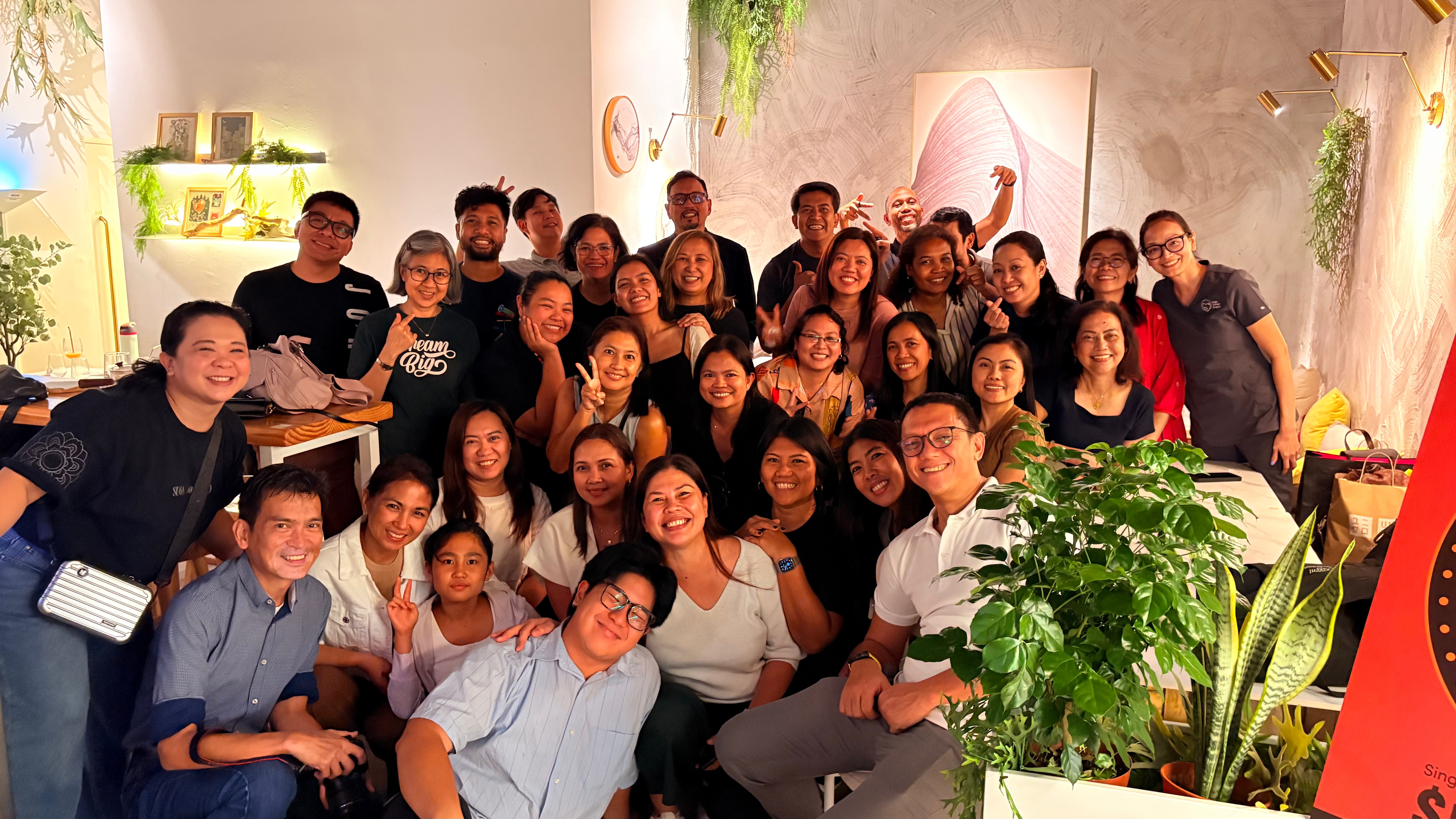
I thought I was attending a book launch. Instead, I found myself listening to the heartbeat of thousands of migrant workers.
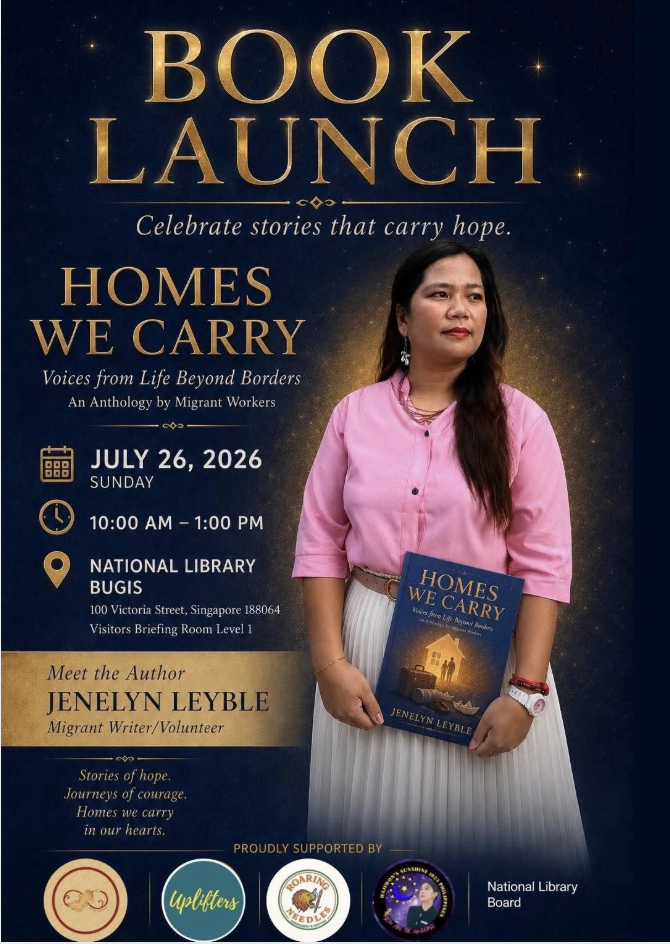
The author is a Filipino domestic helper in Singapore. What inspired me most wasn’t simply that she fulfilled her lifelong dream of publishing her first book. It was that she refused to let her circumstances determine the size of her dreams. Even more remarkable, she didn’t keep that dream to herself.
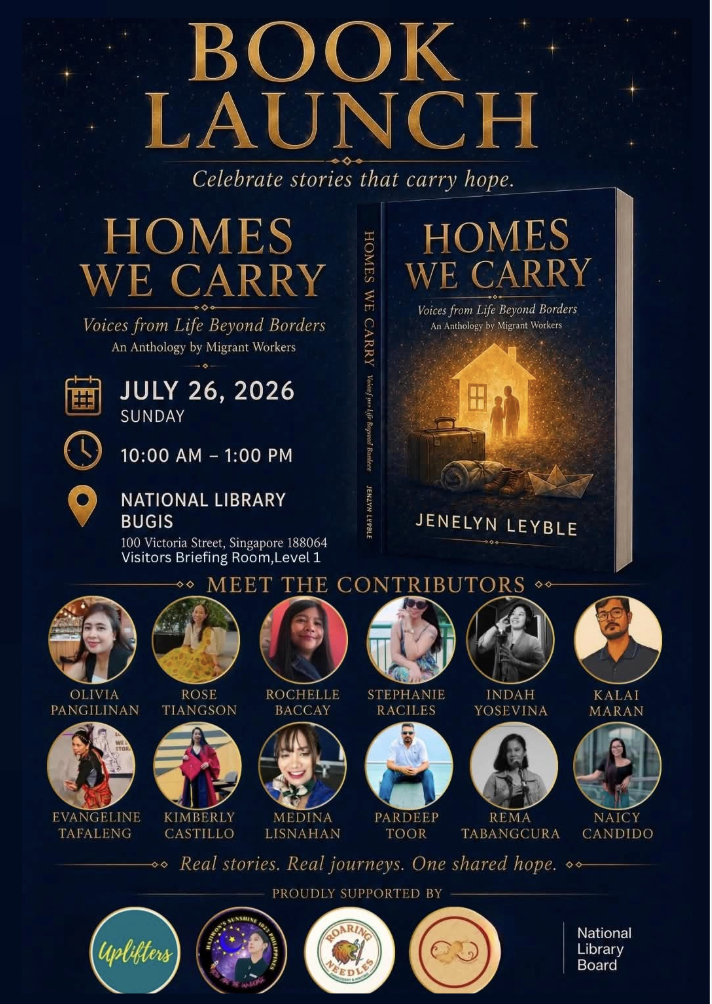
She invited fellow migrant workers to become co-authors—to tell their own stories, write their own poems, and give voice to lives that are too often overlooked. That, perhaps, is what dreams are meant to become. Not ladders that help us climb higher than everyone else. But doors that allow others to enter.
A Song That Felt Like Home
The morning started with an inspirational song. Instead of singing a contemporary worship song, the guest artist chose Ugoy ng Duyan. She shared how it was the lullaby her mother sang to her as a child. Although it is a Kundiman, this morning, it felt almost like a prayer.
As the familiar melody filled the room, I looked around and saw many of our fellow Filipinos quietly wiping away tears. It was no longer just a song. It became every bedtime memory. Every mother’s embrace. Every childhood we wished we could visit again.
Even more touching was hearing one of the guest speakers, a Singaporean poet, novelist, and illustrator, say afterward that although he didn’t understand a word of Tagalog, he could still feel the warmth carried by the music.
The Homes We Carry
Throughout the event, different speakers shared thoughts that stayed with me.
One poet spoke about missing “the ring of your language” … “the slow embrace of love and the love of small embraces.”
Another reminded us, “If you were born into this world, you were meant to be here.”
An Indonesian Embassy representative challenged us to “create homes through kindness.”
Those words beautifully echoed what this entire book is about.
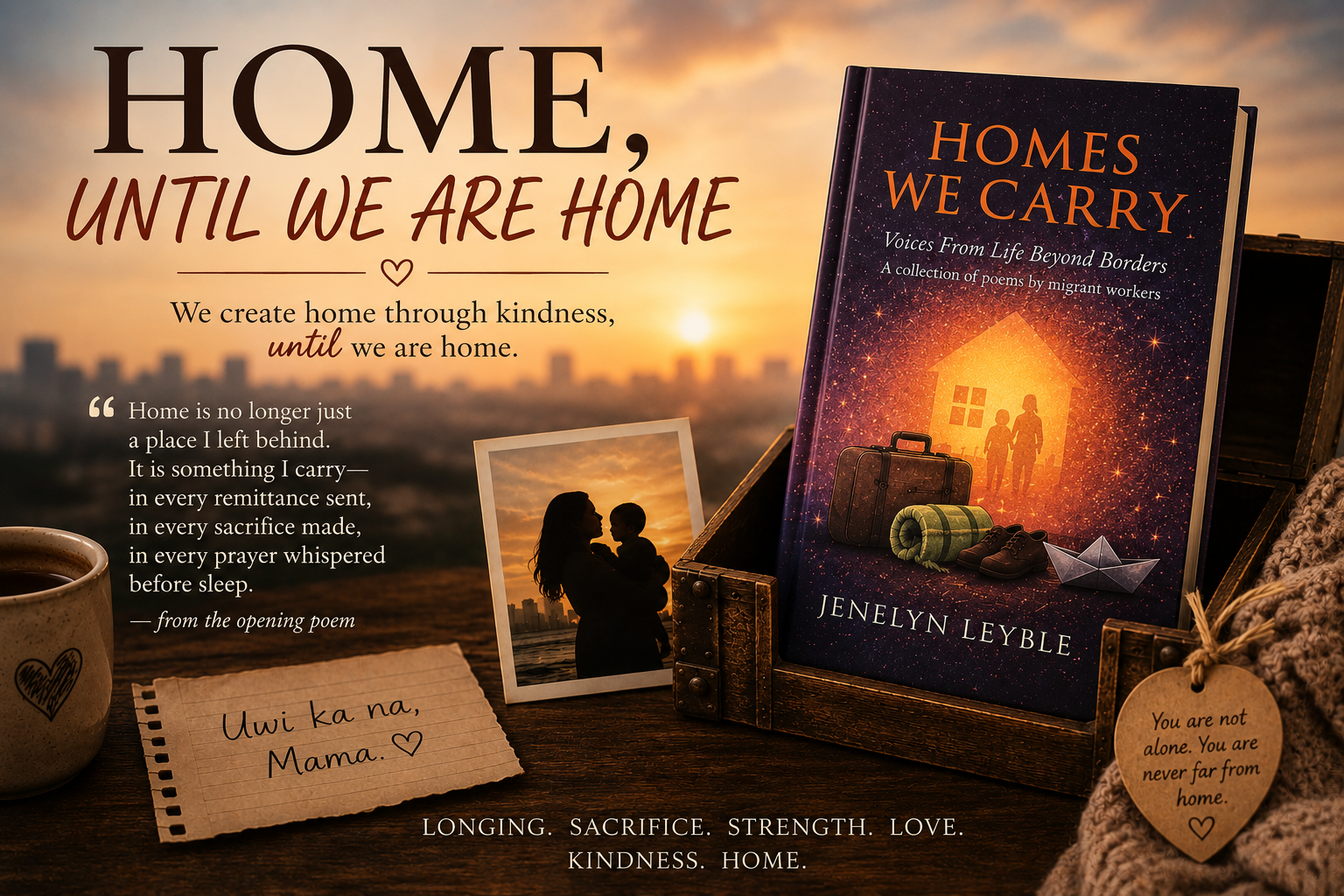
The opening poem by the author describes learning to “dance to the rhythm of survival”, turning longing into strength and discovering that home is no longer merely a place left behind, but something carried in every sacrifice, every remittance, every whispered prayer before sleep.
Those lines capture the life of so many Migrant Workers. Home travels with them. Not in their luggage. But in their hearts.
“Uwi Ka Na, Mama”
Among all the poems, one quietly broke my heart. It was written by someone I have known in church for years. The title was Uwi Ka Na, Mama.
She left for overseas work when her daughter was only one year old. She has now spent more than twenty years working abroad. She recalled the day her little girl, only seven years old then, cried over and kept repeating, “Uwi ka na, Mama.” Come home, Mom.
She shared that even today those words still pierce her heart. Perhaps that is the hidden cost of migration.
People often see the remittances. They celebrate the opportunities. They admire the resilience. But behind every successful migrant worker is usually…
A birthday missed.
A graduation watched through a screen.
A child who learned to grow up while waiting.
A spouse who carried responsibilities alone.
Parents who grew old while hoping the next reunion wouldn’t be years away.
It is a sacrifice few people truly see.
Home Is More Than A Place …
For years I have believed that home is not simply a place. It is not a location marked on a map.Like the song says, home is where love overflows.
Home can be people.
Home can be memories.
Home can be experiences.
Home lives inside us.
A home is not built only with bricks and walls. It is built through friendships that become family.Communities that embrace us. Churches that pray for us. Employers who believe in us. Neighbors who show kindness. Simple moments that remind us: You belong here.
Perhaps that is why so many migrant workers eventually discover a “home away from home.”Singapore has become that for many of us. Not because it replaced the Philippines. But because we have found people here that chose kindness. People who welcomed us.
Worked alongside us.
Believed in us.
Prayed with us.
Loved us.
In doing so, they helped build another home.
… And Yet Home Is Also A Place
Yet if I am honest, there is another truth I cannot ignore.
Just last week I flew back to the Philippines. The moment the plane touched down, the cabin suddenly erupted in applause and cheers. Many of the passengers were Overseas Filipino Workers returning from the Middle East. Some had not gone home for maybe two years or perharps even longer. One voice shouted,
“Sa wakas… pagkatapos ng mga pagtitiis.”
Finally… after all the sacrifices.
At that moment I realized something. Yes, home is more than a place. But for those who have lived apart from their spouses … For mothers who have missed watching their children grow… For fathers who know their sons and daughters mostly through video calls… For children waiting for one more embrace… Home is also very much a place.
It is still the embrace of loved ones.
The dinner table where everyone is finally complete.
The familiar voices echoing through the house.
No matter how beautifully we describe home as something we carry inside us, my heart still aches for every migrant worker who longs to be home, in the arms of the people they love
Perhaps both things are true.
Home is what we carry.
And home is who we long for.
Until We Are Home
As the book launch came to an end, I realized this book is about far more than migrant workers.It is about every human heart searching for belonging.
Perhaps that is why Scripture repeatedly speaks of us as sojourners and pilgrims. We are all carrying a longing for home. Not just an earthly one. But an eternal one. Until then, may we become the kind of people who create homes through kindness.
Who welcome the stranger.
Who make room at the table.
Who help someone feel less alone.
Because sometimes the greatest gift we can offer another person is not a house.
It is the feeling that they belong.
“Consequently, you are no longer foreigners and strangers, but fellow citizens with God’s people and also members of his household.” – Ephesians 2:19
May we continue building homes, not only with walls, but with love.
Because in the end, the most beautiful homes are the ones we carry within us… until we finally arrive home.