Tag Archives: Reflections

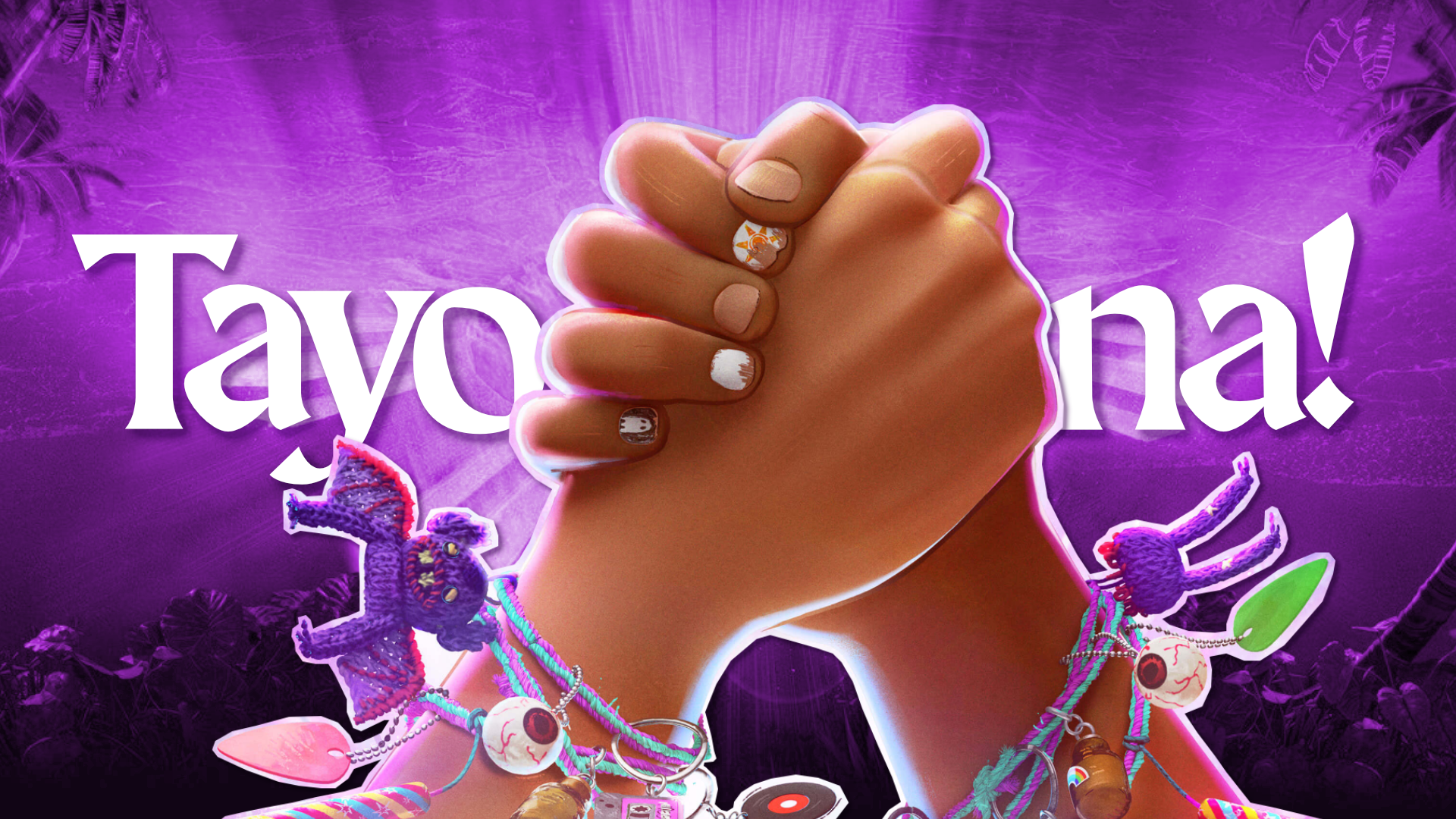
Reflections: ‘Forgotten Island’ Tayo Na!!! … On being seen, belonging, and leaving no one behind.

Two simple Filipino words.

Of all the things that stayed with me after watching Forgotten Island – the friendship, the memories, the mythology, the karaoke, even the very Filipino “Hay nako!” … it was these two words that somehow followed me home: Tayo na!

The easiest English translation would probably be, “Let’s go.” But somehow, “Let’s go” doesn’t quite say it. Because tayo na is not simply an invitation to go somewhere. There is something deeply Filipino tucked inside those words. Tayo means us … you and me together.

So when I hear tayo na, I hear more than “Let’s go.”, I hear :

Come with me.
We’re doing this together.
I’m not leaving you behind.

There is a sense of belonging in those two words. A quiet commitment that wherever we are going, we are going there together. And perhaps that is why Forgotten Island struck something deeper in me than I expected.

A Filipino Story Told to the World

There was something incredibly satisfying and honestly, something that made me proud about seeing Filipino mythology take center stage in a major animated movie. Growing up, the manananggal was something to fear. The kapre lurked around trees. And the duwende? You learned early enough not to disrespect places where they might live. You passed through grassy areas or unfamiliar ground saying: “Tabi-tabi po.” (Excuse me. Let me pass.)

And now here they were on the big screen!!!

But Forgotten Island did something interesting with these creatures. Instead of simply presenting the mythology we grew up with, it gave these characters personalities, wounds, insecurities and stories.

That was when the movie stopped being simply nostalgic for me. Because somehow, behind these mythical creatures, I started seeing us.

There Is Always Another Side to the Story.
Take Manang.

We have always known the manananggal as the bad one, the monster, the creature we are supposed to fear. Yet the movie leaves us with the possibility that perhaps Manang was not always this way. Something was taken from her. We don’t fully know what yet.

And that cliffhanger stayed with me because it reminded me how quickly we can define people according to the version of them we encounter.

Difficult.
Angry.
Arrogant.
Attention-seeking.
Selfish.
Bad.

But what happened before we met them? What was taken from them?

What disappointment, rejection, loss or hurt are they carrying that we know nothing about? A saying goes “hurt people hurt people”. It doesn’t mean that hurt excuses the hurt we cause others. But it does remind me that every person comes with a context. There is almost always another side to the story.

Sometimes Arrogance Is Really a Question: “Do I Belong?”
Then there’s Mermahn.

He comes across as arrogant, image-conscious and constantly concerned about how he is perceived. But underneath all that swagger, what I saw was someone asking a much simpler question: “Do you accept   me?” And suddenly, he didn’t seem all that strange. Because aren’t we doing versions of the same thing? Maybe especially our young people.

We curate our social media feeds. We worry about how we look. We want the right clothes, the right friends, the right image. We want people to think we’re doing okay, even when we’re not. Sometimes what looks like vanity on the outside is insecurity underneath. Sometimes the person trying hardest to impress everyone is quietly asking: “Am I enough to belong here?”

Sometimes Bad Behaviour Is Really Saying: “Please Notice Me.”
And then there is Raww.

The dog who seems to pee everywhere. At first, he’s funny, irritating and even conniving. But eventually we understand something else: Raww wants to be noticed. His job is to bring people to Batiba. He has his own agenda. Yet something changes when Jo and Raissa give him something he wasn’t expecting … Belonging.

And when faced with the possibility that one of their precious memories would have to disappear, Raww offered something precious of his own, the camera connected to one of his most meaningful memories with Jo and Raissa which they will forget. The character who initially seemed to be thinking only of himself learned to give something of himself. And I found that surprisingly moving. Because sometimes people don’t change because someone finally corrected them. Sometimes people change because someone finally loved them.

The Joy We Bring

One of my favorite little moments involved the Kapre remembering Jo and Raissa singing together as one of the most fun experiences they had encountered. And I thought … That is so Filipino!!! Give us a microphone and apparently even mythical creatures are not safe.

We sing.
We laugh loudly.
We gather around food.
We turn ordinary moments into celebrations.
Put Filipinos somewhere far from home and somehow there will eventually be karaoke.
But underneath the humour is something I genuinely treasure about being Filipino.
We bring warmth.
We bring energy.

We have this ability to make strangers feel like family, to make a room feel lighter, to turn hardship into laughter and an ordinary evening into a memory. Perhaps that is one of the gifts we carry wherever we go.  And knowing a little of the story behind Forgotten Island made this part of the movie even more meaningful to me.

Co-director Januel P. Mercado is Filipino-American, born to Filipino parents, and the film became in many ways a love letter to the culture he grew up with. Together with his longtime friend and co-director Joel Crawford, the journey of creating the movie also brought them to the Philippines … to family, food, karaoke, stories, laughter and that unmistakable warmth of being surrounded by people who make you feel you belong.

I love that little glimpse behind the film because somehow the story behind the story mirrors the story on the screen. A movie about two friends trying not to lose each other was created by two longtime friends. A movie about memories was shaped by people reconnecting with their own. A movie about finding your way home found inspiration in returning to Filipino roots.

And somewhere in all of that are the things we Filipinos know so well … family, food, laughter, singing, stories, and the tendency to make room for one more person at the table. Maybe that’s why those little Filipino moments in the movie didn’t feel forced to me. They felt like home. And perhaps that’s also why Tayo na carries so much weight. Because behind those two words is something we have always known.  Wherever we’re going, there’s always room for one more to come along.

Sometimes We Need Someone to Let Us Grow
Bungi made me laugh, too.

Here was someone already grown but still unable to cut the proverbial umbilical cord from his mother. But given the opportunity to step out, he discovered that he was capable of far more than he knew. How many people remain small simply because they have never been given the opportunity to discover that they can be bigger? Sometimes loving someone means protecting them. But sometimes loving someone means letting them try.

Letting them fail.
Letting them discover.
Letting them become.

Maybe for some, Respect is all they want.
And then there were the duwendes.

We grew up being warned about them. Don’t step on them. Don’t disturb them. Say “tabi-tabi po” when passing through places where they might be. Yet here they were these cute little beings who seemed less interested in terrorizing humans and more interested in simply being respected.

Again, I found myself thinking about people. How often do we fear what we don’t understand? How often do we label someone before getting close enough to know them?

Sometimes the distance between fear and friendship is simply understanding.
And Then There Were Jo and Raissa

Perhaps the most beautiful example of this was Jo herself. At the beginning, Jo can seem loud, rough, even nasty at times. But at the end, we see that memory of the first time Jo and Raissa met and suddenly we meet a different Jo. A softer Jo. A girl who simply wanted a friend. A girl who wondered whether anybody wanted to be her friend.

And perhaps this is the thread that connects almost everyone on this forgotten island:

We all want someone to see us.
Someone to hear us.
Someone to believe in us.
Someone to choose us.
Someone to say,
“Tayo na.”

Jo found that person in Raissa.

But friendship brings another difficult lesson. Sometimes we love someone so deeply that we become afraid of who we will be without them. Jo didn’t want to lose Raissa. And somewhere along the way, love became mixed with fear. Holding on became more important than allowing her friend to move forward. That, too, is painfully human.

We can love someone and still become selfish with them. We can want the best for someone while secretly hoping their best doesn’t take them somewhere away from us. Growing together sometimes means learning when to hold on. And sometimes it means learning when to let go.

When People Break Each Other

One thing Manang said particularly stayed with me. She believed that this was what separated her from humans, when people break each other, they don’t come back.

And Jo and Raissa proved her wrong. They hurt each other. They misunderstood each other. They said things from places of fear and pain. But their hurt did not become greater than their love. They came back.

Not necessarily to the friendship exactly as it had been before, but to something perhaps more mature …  a friendship that could survive change.

Raissa could pursue her dreams. And Jo could finally confront something frightening of her own “Who am I without Raissa?” For so long, Jo seemed to define herself through their friendship. But losing the familiar version of their relationship didn’t mean losing herself. It gave her the chance to discover herself. And beautifully, she became a storyteller. Something that, when we look back, had always been inside her.

Sometimes the end of one chapter does not mean we have lost who we are. Sometimes it is how we finally discover who we have always been.

And Some of Us Are Still Batiba
Then there is Batiba.

Living in the shadows.
Afraid to step out.
Afraid to take the risk.

And maybe some of us are there.

We want community but are afraid to enter it. We want to be known but are afraid to be vulnerable. We want something different but are afraid to take the first step. We wait for someone to notice us while simultaneously hiding ourselves.

Maybe what Batiba needed and what many of us need is someone standing outside the shadows saying … Tayo na! Come with us!

Maybe This Isn’t Just About Young People

I first started thinking about these themes because of the young people around me.

The desire to belong.
The need to be seen.
The pressure to look good.
The fear of rejection.
The cliques.
The attention-seeking.
The insecurity hidden behind confidence.

But the longer I thought about Forgotten Island, the more I realized that these aren’t youth struggles. These are human struggles.

Adults simply learn more sophisticated ways of hiding them. We still want to belong. We still compare. We still worry about what people think. We still fear being forgotten. We still hold onto relationships because we don’t know who we would be without them.

We still hide in shadows. And we still need someone who will look at us and say:

I see you.
There is room for you here.
Tayo Na

Maybe that is why this simple reminder from Scripture feels so fitting

“Above all, love each other deeply, because love covers over a multitude of sins.” — 1 Peter 4:8

Love each other deeply … Maybe that’s where it begins. Not with understanding everything about another person. Not with fixing everyone. Not even with agreeing with everyone. But with being willing to see beyond the surface.

Perhaps there is a Mermahn around us whose confidence is hiding insecurity.
A Raww whose irritating behaviour is really asking to be noticed.
A Bungi who needs someone to believe he can do more.
A Batiba who wants to step out but is terrified.
A Jo who looks loud and tough but secretly wonders whether anybody wants to be her friend.
Or even a Manang whose anger has a story we have never bothered to hear.

We may not be able to fix everyone’s wounds. But perhaps we can begin by refusing to reduce people to the first version of them we encounter.

We can listen.
We can make room.
We can invite.
We can stay.

Because sometimes a person’s life doesn’t need a crowd of people believing in them. Just like Raissa who became that one person who reached out to Jo. Sometimes all it takes is one.

One person who sees.
One person who listens.
One person who stays.
One person who says:
Tayo na.

And maybe those two simple Filipino words contain something our increasingly individualistic world desperately needs. Not go. Not even simply let’s go. But:

You don’t have to go alone.
We are in this together.
Tayo na!!!
A Night of Thanks-Living

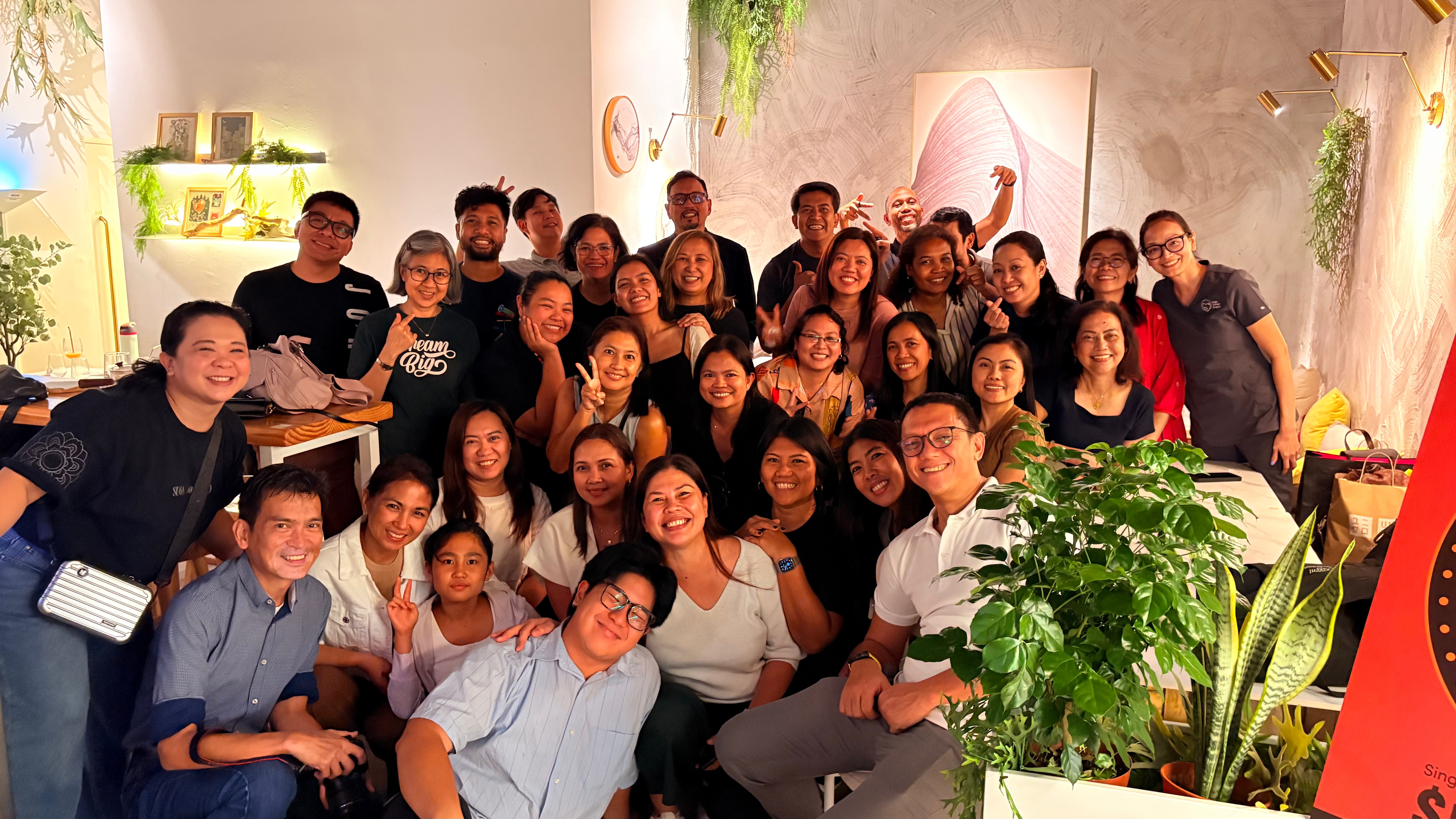
Last night, after celebrating Mosaic’s 19th anniversary, we gathered again for a special thanksgiving night. It wasn’t a night of programs, but a time of full tummies, open hearts, stories shared, and gratitude rising from every corner of our community.

What LIKHAYAG Means

Our theme this year, LIKHAYAG, is a word we coined and it carries the heart of who we are becoming.

  • LIKHA – to create, the handiwork of God. As Ephesians 2:10 reminds us, “For we are God’s workmanship, created in Christ Jesus to do good works…” We are His masterpiece, shaped with purpose.
  • KAHAYAG – a Visayan word for light or sinag, the radiance that breaks into darkness.
  • HAYAG in Tagalog – to proclaim, to make known, to reveal.

Put together, LIKHAYAG is a declaration: We are created to shine, to live as God’s handiwork, and to proclaim His light and love in the world. And this was exactly what Thanksgiving night reflected, stories of God’s light made visible through His people.

Stories of Gratitude

A few of us shared their own Likhayag stories. One of us shared how she went from helping brainstorm the theme to being entrusted with the design and souvenir booths. At first, she felt overwhelmed and don’t know if she can really do it. But she was grateful,  because in her weakness, she found strength in community. Others stepped in, and she realized she didn’t have to carry the work alone.

A dear brother who had been quiet for some time, suddenly found himself behind the camera for our anniversary. Not only did he capture moments that will be remembered, but he also rediscovered the joy of serving. In fact, he even found the camera lens he had long been searching for, suddenly available just in time. To him, it felt like God opening a door for him to return to service.

Two others were new in the ministry. One, totally new, served in the food ministry. Another had been longing for an opportunity to serve again after some time away. She finally found her place helping in candle-making. Both stories reminded us that no act of service is too small and that God always makes room for willing hearts.

There were more stories like these, each one unique, but together they painted the same truth: God moves even through our ordinary hands.

Thanks-Living

Our pastor’s short exhortation pierced deeply: a truly transformed life is marked by gratitude. And more than just words, gratitude is best shown through “Thanks-Living”,  living daily in a way that reflects how thankful we really are. He reminded us not to wait until people are gone before we appreciate them. Gratitude is meant to be spoken now, lived now, shared now.

The Song That Became a Prayer

The highlight of the night was when Coach NT sang “I Won’t Last a Day Without You.” A familiar love song, yes but in that moment, it became something more. It became a hymn of dependence on God, and a love letter to the people around us.

One line echoed in my heart:
“I can take all the madness the world has to give but I won’t last a day without you.”
And I realized, that’s Mosaic to me. That’s what ministry is for me. Without God and without this family He has placed me in, I wouldn’t last.

I found myself in tears because God reminded me: this is my to live for and to die for. This is LIKHAYAG, not a perfect work, but a radiant one, carried out by imperfect people who lean on a perfect God.

Serving isn’t easy. There are struggles, disappointments, even moments when I want to give up. But at the end of the day, I always return to this calling. And I know deep in my heart, I would not exchange this life for anything else. Because this is what it means to be LIKHAYAG: created to shine, created to proclaim, created to live in gratitude

“Give thanks in all circumstances; for this is God’s will for you in Christ Jesus.” – 1 Thessalonians 5:18

LIKHAYAG – Lumikha. Magliwanag. I-HAYAG!

The Sand Beneath Our Feet

You’re Not Stuck Yet … But You Will Be
Temptation doesn’t always come loud or strong. Sometimes it just waits for you to stay long.

Day 1 of our Bali trip, and we decided to take a relaxed walk through the Seminyak area, eventually arriving at Seminyak Beach. I didn’t expect a spiritual lesson while walking along the shoreline, but life has a way of slipping truth into the most unexpected places.

We were simply enjoying the breeze, the sun dipping low into the horizon, the rustling sound of the waves, and the softness of the sand, until we stumbled upon a patch that felt strangely different. It was moist, and while we were just playing around with our bare feet, we noticed something odd … our feet were slowly sinking.

It felt like quicksand … not the dramatic kind that swallows you whole in an instant, but something that felt alive. Even while standing still, I could feel the earth gently but persistently tugging at my feet.

We laughed. It wasn’t dangerous … we knew that. But still, it was bizarre. I stood in one spot for a while, curious. And then, it got real. I felt my legs sinking past the ankle, reaching the mid of my shin. The sand tightened … for real. My calves felt wrapped in something cold and unyielding. We were still laughing about it and so fascinated when I saw across me Lester was already almost past mid-shin sunken in the sand and just told everyone to get off. It’s fun (and a little eerie), and honestly, it’s a great metaphor too … something that seems solid but slowly pulls you in when you stay still too long.

Later that night, back at the villa, we were recounting the day’s highlights with Ken and Dina, who weren’t able to join us. As we shared the “quicksand moment,” Dina said something that struck a chord: “That’s exactly what temptation feels like.”

She was right.

That is what temptation feels like. Temptation doesn’t always scream danger. It often comes dressed in comfort. It starts soft. Innocent. Maybe even fun. You think you’re in control, that you can just try it and step away whenever you want.

Until you can’t.

Temptation is just like that sand.
Like that sand, temptation doesn’t pull you in all at once. It looks harmless, normal even. But the longer you stay, the more it grips you. And the more you try to fight it on your own, the tighter it gets

Dina reminded us of something our senior pastor once said :

“It is easier to avoid temptation than to resist it.”

I already know this but it made so much sense as I recalled how I felt the sand slowly claim my legs that day.

And Scripture backs that up. Joseph knew it too.

When Potiphar’s wife tried to seduce him, he didn’t flirt with the line. He didn’t argue. He didn’t try to “stand his ground.”

“But he left his cloak in her hand and ran out of the house.” — Genesis 39:12

He RAN.

The Apostle Paul echoes the same wisdom in the New Testament:

“Flee the evil desires of youth and pursue righteousness, faith, love and peace, along with those who call on the Lord out of a pure heart.” — 2 Timothy 2:22

Don’t fight it. Flee it.
You’re not weak for running. You’re wise for refusing to stand where the ground is not safe.

Here are 3 truths I’m holding on to after that beach moment:

  • Temptation often looks harmless at first.
    That’s why awareness is key. Don’t stand where you’re not meant to.
  • The longer you linger, the harder it is to escape.
    What seems manageable now can suffocate you later.
  • The wisest move is not resistance, but distance.
    Don’t argue with temptation—outrun it.

So the next time you find yourself near something that feels “off,” remember this:
You don’t need to prove how strong you are.
You just need to stay where the ground is solid.

Wicked Truths: The Side of the Story We Never Hear

I recently watched Wicked for the second time. And it still, exceeded my expectation. The visuals were dazzling and had my heart pounding. The songs especially Unlimited and Defying Gravity had me smiling like it was the first time. And the lines? Even wittier, even sharper than I remembered.

I walked into the theatre expecting entertainment with maybe a sprinkle of  The Wizard of Oz nostalgia. What I didn’t expect was to walk out with a journal full of questions about human nature, courage, and the stories we choose to believe about others, and ourselves. It left me holding a mirror up to my own heart. Because more than the green face paint and broomsticks, Wicked is a story about perception, prejudice, power, and most of all TRUTH.

Here are the reflections that stayed with me long after the curtain closed.

Born This Way?
One of the most striking questions raised in the play is: Are people born wicked? Or do they have wickedness thrust upon them?
It’s haunting, but also liberating to consider that we are born with a clean slate. Innocent. Curious. Capable of great love and great light. And yet through judgment, rejection, misunderstanding, then white starts turning into gray. What starts out pure slowly distorts.

Elphaba wasn’t wicked. She was simply different. And that was enough for the world to turn against her.

The Power of Being Seen
There’s a moment when Elphaba unintentionally unleashes her powers, causing a stir in the classroom. People are scared. But instead of punishing her, her teacher sees something else: TALENT.

It hit me hard. Because how often do we confuse unfamiliar with dangerous? How we silence the extraordinary because it shows up in ways we don’t expect.
All it took was one voice to say, “You have something special.” And in that moment, Elphaba’s life takes a new direction. Sometimes, that’s all it takes, to be seen, to be spoken to. It’s a quiet nudge to all of us. Never underestimate the power of being seen. Never underestimate the power our words hold to another life.

Unlimited: A Song, A Mindset
“Unlimited. My future is unlimited…”
It’s more than a lyric, it’s a reminder.

Our past does not define the ceiling of our future. Even when others try to limit us, even when we doubt ourselves, there is always space to grow beyond what’s been written for us.
Believing in what’s possible is where transformation begins.

Dr. Dillamond : When Voices are Silenced.
“If you make it discouraging enough, you can keep anyone silent.” — Dr. Dillamond, Wicked

The talking goat professor, Dr. Dillamond, finds himself gradually silenced. His very identity is threatened, and eventually, he’s removed from his position.

It’s subtle, yet painful. Discouragement doesn’t always shout, it often whispers. And when the system repeatedly tells someone they don’t belong, the easiest thing to do is to fade away. Sometimes, oppression doesn’t come as a roar. It comes as a whisper that tells us to keep quiet, play small, or stay in line.

When discouragement grows loud enough, it can muzzle even the wisest voices.

His story is a warning: when voices are quieted, we all lose a bit of our collective wisdom.

The Wizard and the Trap of Applause
The Wizard of Oz wasn’t evil, per se. He was just caught. Caught in the facade. Caught in the praise. Caught in the version of himself that others believed in.

When people told him he was “wonderful,” he didn’t correct them. He leaned into the illusion, because who wouldn’t want to be adored? Eventually, the illusion swallowed him whole.
It’s a cautionary tale for any of us chasing approval. It’s dangerously easy to become a prisoner of the persona we create to please others. And I’m reminded … I only need an Audience of One. I don’t need the applause of many or anyone because I have Him who knows me. His applause is louder than any uproar. Whenever I feel the pull for approval, I return to this truth: I don’t need to be loud to be seen by the One who truly knows me. This song keeps me grounded :

I don't need my name in lights
I'm famous in my Father's eyes
Make no mistake
He knows my name
I'm not living for applause
I'm already so adored
It's all His stage
He knows my name
oh, oh
He knows my name oh, oh


I'm not meant to just stay quiet
I'm meant to be a lion
I'll roar beyond a song
With every moment that I've got
True to who You are
You saw my heart
And made
Something out of nothin
g
- He Knows My Name by Francesca Battistelli

Defying Gravity: The Courage to Rise
Of course, Wicked’s most iconic anthem is Defying Gravity. And it’s not just a song about flying, it’s about rising.
Rising above judgment.
Rising above fear.
Rising above who the world says you’re supposed to be.

It’s that defining moment we all face at some point where we stop waiting for permission and choose to live truthfully, even if it means flying solo.

The Other Side of the Story
But if there’s one takeaway that truly left an imprint on me, it’s this:
There is always another side to the story.

Elphaba was labeled as “wicked,” but the truth never made it to the spotlight. Her reputation was built on lies, her actions twisted by those in power. And it makes you wonder … how many people in real life are living under labels they never asked for?

How many “villains” are just misunderstood?
How many “outcasts” are simply walking a different path?

It reminded me that judgment is easy but context is everything. Behind every story is another version waiting to be heard. And behind every person is a history we don’t see.

So maybe the question isn’t “Is she wicked?”
Maybe it’s: “What don’t I know yet?”

Wicked isn’t just a reimagining of Oz. It’s a challenge. A call to question how we define good and evil, how we treat those who are different, and how quickly we accept one version of the truth.
And maybe that’s what Wicked ultimately teaches us:
That truth isn’t always what’s seen. That judgment is often louder than understanding.
And that the most radical thing we can do is pause, lean in, and look again.

Because behind every label is a life.
And behind every “wicked” face is a story still unfolding.

And maybe, just maybe, the most courageous thing we can do is to defy the gravity of assumption and CHOOSE COMPASSION instead.

Let these words remind us:

“The Lord does not look at the things people look at. People look at the outward appearance, but the Lord looks at the heart.”
— 1 Samuel 16:7 (NIV)

The March That Mattered

A reminder that marching on is not just one bold move, but many small, faithful ones.

Before 2024 ended, my friends and I asked ourselves a simple but powerful question: “What will your 2025 headline be?” It was our way of manifesting what we wanted to see ourselves achieving in 2025. Mine was: “From holding back to marching on.” Bold. Hopeful. Scary.

You see, I had dreams tucked away for too long, one of which is stepping into professional speaking, a passion rooted in my desire to inspire and encourage others. After joining the Get Paid to Speak bootcamp, I felt like I had finally taken the first step. I imagined speaking in workshops or conferences, writing a book or even a shallow but equally big dream of emceeing a fan meet … Dreams that once felt distant now seemed within reach.

But then came the whispers:
“Can I really do this?”
“What do I have to offer?”
The familiar hesitation returned, dressed up as busyness and doubts. Until one day, just before the new year, I told myself:
“Enough. I have to march on.”

I declared 2025 as the year I’d finally start … intentionally, courageously.

Then January passed. February. And in a blink, Q1 was over.
Work picked up speed.
Travel came back into the picture.
My Wednesday prayer nights often clashed with meetings and commitments.
It felt like the stars weren’t aligning.
Not yet.

Tonight, at our Wednesday prayer night, we were asked:
“What’s your biggest answered prayer for the first quarter?”
For a moment, I couldn’t think of anything.
Time flew by. What did I accomplish? Did I even move?
And then I remembered March.

A group of students, aged 14 to 18, visited from a school in the Philippines. I was invited to speak to them – no formal topic, just a short talk about being a “Global Filipino.” And as I stood there, sharing my heart with these young dreamers, I felt something sparked within me once again … JOY. PURPOSE. FIRE.

It hit me … this was it.
This was an answered prayer.

Because more than just being able to speak, I had the opportunity to inspire. Not just to push them toward worldly success, but to question the “why” behind their dreams. I reminded them that being a Global Filipino isn’t just about how far you can go but how many people you uplift along the way.

That same Sunday, we brought these students to Lucky Plaza to meet our fellow Filipino OFWs. I watched their eyes open to the pain, strength, and sacrifices of our kababayans. That encounter didn’t just move them, it inspired them and deepened their dreams.

To cap off March, I took a trip to Hong Kong with friends, and once again found myself in the heart of Central, surrounded by hardworking OFWs, each one with a story, a sacrifice, a hope. I carried with me a quiet ache and a growing question: How can we help our kababayans here too?

So here I am, closing Q1 of 2025 with no big speeches.
No emcee gigs.
No book launch.
None Yet.
But I am grateful. Because maybe this quarter wasn’t about doing something grand,
but about remembering why I wanted to start in the first place.

My heart still beats for people.
And in a fast-paced world like Singapore, where it’s easy to grow numb, that alone is a gift.
To still feel.
To still care.
To still long to serve.
From holding back to marching on … maybe that’s not just a one-time leap, but a step-by-step journey.
And this was my first step.
A reminder that marching on is not just one bold move but many small, faithful ones.

As I reflect on this journey, I’m reminded that even the quietest acts of obedience matter. That our not-yets still hold purpose. And our small yeses, strung together, can move mountains. Because in the end, it’s not always about how far we’ve gone but that we’ve chosen to begin and to keep going. Even if we don’t see the full picture yet. Even if the timing feels off or the path still feels unclear. What matters is that we move. In faith. In love. With purpose

As one wise voice once said:
“Take the first step in faith. You don’t have to see the whole staircase, just take the first step.” – Martin Luther King Jr.

And in those steps especially the quiet, unseen ones, we hold on to this promise:
“And let us not grow weary in doing good, for at the proper time we will reap a harvest if we do not give up.” – Galatians 6:9 (NIV)