Two simple Filipino words.
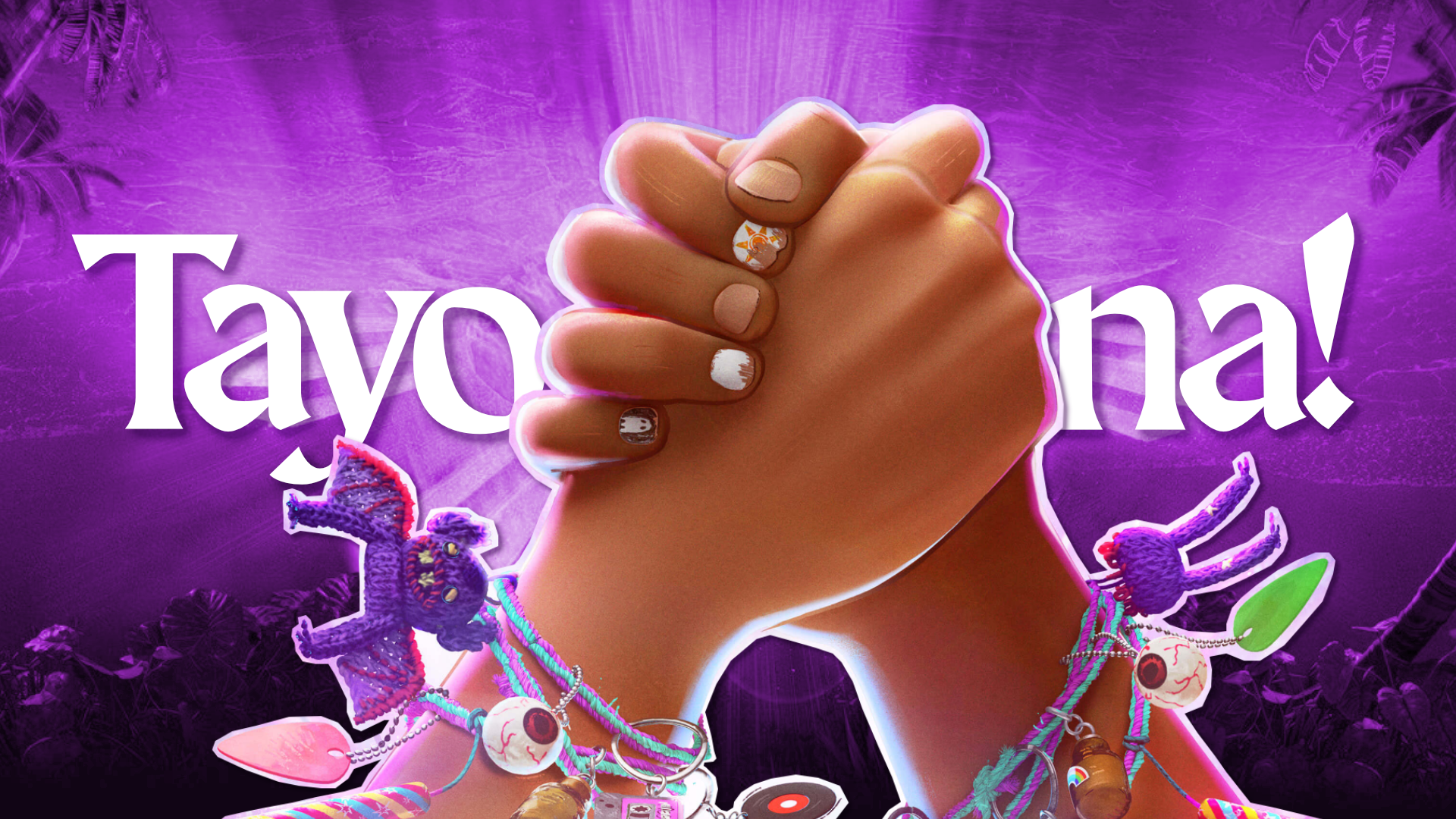
Of all the things that stayed with me after watching Forgotten Island – the friendship, the memories, the mythology, the karaoke, even the very Filipino “Hay nako!” … it was these two words that somehow followed me home: Tayo na!
The easiest English translation would probably be, “Let’s go.” But somehow, “Let’s go” doesn’t quite say it. Because tayo na is not simply an invitation to go somewhere. There is something deeply Filipino tucked inside those words. Tayo means us … you and me together.
So when I hear tayo na, I hear more than “Let’s go.”, I hear :
Come with me.
We’re doing this together.
I’m not leaving you behind.
There is a sense of belonging in those two words. A quiet commitment that wherever we are going, we are going there together. And perhaps that is why Forgotten Island struck something deeper in me than I expected.
A Filipino Story Told to the World
There was something incredibly satisfying and honestly, something that made me proud about seeing Filipino mythology take center stage in a major animated movie. Growing up, the manananggal was something to fear. The kapre lurked around trees. And the duwende? You learned early enough not to disrespect places where they might live. You passed through grassy areas or unfamiliar ground saying: “Tabi-tabi po.” (Excuse me. Let me pass.)
And now here they were on the big screen!!!
But Forgotten Island did something interesting with these creatures. Instead of simply presenting the mythology we grew up with, it gave these characters personalities, wounds, insecurities and stories.
That was when the movie stopped being simply nostalgic for me. Because somehow, behind these mythical creatures, I started seeing us.
There Is Always Another Side to the Story.
Take Manang.
We have always known the manananggal as the bad one, the monster, the creature we are supposed to fear. Yet the movie leaves us with the possibility that perhaps Manang was not always this way. Something was taken from her. We don’t fully know what yet.
And that cliffhanger stayed with me because it reminded me how quickly we can define people according to the version of them we encounter.
Difficult.
Angry.
Arrogant.
Attention-seeking.
Selfish.
Bad.
But what happened before we met them? What was taken from them?
What disappointment, rejection, loss or hurt are they carrying that we know nothing about? A saying goes “hurt people hurt people”. It doesn’t mean that hurt excuses the hurt we cause others. But it does remind me that every person comes with a context. There is almost always another side to the story.
Sometimes Arrogance Is Really a Question: “Do I Belong?”
Then there’s Mermahn.
He comes across as arrogant, image-conscious and constantly concerned about how he is perceived. But underneath all that swagger, what I saw was someone asking a much simpler question: “Do you accept me?” And suddenly, he didn’t seem all that strange. Because aren’t we doing versions of the same thing? Maybe especially our young people.
We curate our social media feeds. We worry about how we look. We want the right clothes, the right friends, the right image. We want people to think we’re doing okay, even when we’re not. Sometimes what looks like vanity on the outside is insecurity underneath. Sometimes the person trying hardest to impress everyone is quietly asking: “Am I enough to belong here?”
Sometimes Bad Behaviour Is Really Saying: “Please Notice Me.”
And then there is Raww.
The dog who seems to pee everywhere. At first, he’s funny, irritating and even conniving. But eventually we understand something else: Raww wants to be noticed. His job is to bring people to Batiba. He has his own agenda. Yet something changes when Jo and Raissa give him something he wasn’t expecting … Belonging.
And when faced with the possibility that one of their precious memories would have to disappear, Raww offered something precious of his own, the camera connected to one of his most meaningful memories with Jo and Raissa which they will forget. The character who initially seemed to be thinking only of himself learned to give something of himself. And I found that surprisingly moving. Because sometimes people don’t change because someone finally corrected them. Sometimes people change because someone finally loved them.
The Joy We Bring
One of my favorite little moments involved the Kapre remembering Jo and Raissa singing together as one of the most fun experiences they had encountered. And I thought … That is so Filipino!!! Give us a microphone and apparently even mythical creatures are not safe.
We sing.
We laugh loudly.
We gather around food.
We turn ordinary moments into celebrations.
Put Filipinos somewhere far from home and somehow there will eventually be karaoke.
But underneath the humour is something I genuinely treasure about being Filipino.
We bring warmth.
We bring energy.
We have this ability to make strangers feel like family, to make a room feel lighter, to turn hardship into laughter and an ordinary evening into a memory. Perhaps that is one of the gifts we carry wherever we go. And knowing a little of the story behind Forgotten Island made this part of the movie even more meaningful to me.
Co-director Januel P. Mercado is Filipino-American, born to Filipino parents, and the film became in many ways a love letter to the culture he grew up with. Together with his longtime friend and co-director Joel Crawford, the journey of creating the movie also brought them to the Philippines … to family, food, karaoke, stories, laughter and that unmistakable warmth of being surrounded by people who make you feel you belong.
I love that little glimpse behind the film because somehow the story behind the story mirrors the story on the screen. A movie about two friends trying not to lose each other was created by two longtime friends. A movie about memories was shaped by people reconnecting with their own. A movie about finding your way home found inspiration in returning to Filipino roots.
And somewhere in all of that are the things we Filipinos know so well … family, food, laughter, singing, stories, and the tendency to make room for one more person at the table. Maybe that’s why those little Filipino moments in the movie didn’t feel forced to me. They felt like home. And perhaps that’s also why Tayo na carries so much weight. Because behind those two words is something we have always known. Wherever we’re going, there’s always room for one more to come along.
Sometimes We Need Someone to Let Us Grow
Bungi made me laugh, too.
Here was someone already grown but still unable to cut the proverbial umbilical cord from his mother. But given the opportunity to step out, he discovered that he was capable of far more than he knew. How many people remain small simply because they have never been given the opportunity to discover that they can be bigger? Sometimes loving someone means protecting them. But sometimes loving someone means letting them try.
Letting them fail.
Letting them discover.
Letting them become.
Maybe for some, Respect is all they want.
And then there were the duwendes.
We grew up being warned about them. Don’t step on them. Don’t disturb them. Say “tabi-tabi po” when passing through places where they might be. Yet here they were these cute little beings who seemed less interested in terrorizing humans and more interested in simply being respected.
Again, I found myself thinking about people. How often do we fear what we don’t understand? How often do we label someone before getting close enough to know them?
Sometimes the distance between fear and friendship is simply understanding.
And Then There Were Jo and Raissa
Perhaps the most beautiful example of this was Jo herself. At the beginning, Jo can seem loud, rough, even nasty at times. But at the end, we see that memory of the first time Jo and Raissa met and suddenly we meet a different Jo. A softer Jo. A girl who simply wanted a friend. A girl who wondered whether anybody wanted to be her friend.
And perhaps this is the thread that connects almost everyone on this forgotten island:
We all want someone to see us.
Someone to hear us.
Someone to believe in us.
Someone to choose us.
Someone to say,
“Tayo na.”
Jo found that person in Raissa.
But friendship brings another difficult lesson. Sometimes we love someone so deeply that we become afraid of who we will be without them. Jo didn’t want to lose Raissa. And somewhere along the way, love became mixed with fear. Holding on became more important than allowing her friend to move forward. That, too, is painfully human.
We can love someone and still become selfish with them. We can want the best for someone while secretly hoping their best doesn’t take them somewhere away from us. Growing together sometimes means learning when to hold on. And sometimes it means learning when to let go.
When People Break Each Other
One thing Manang said particularly stayed with me. She believed that this was what separated her from humans, when people break each other, they don’t come back.
And Jo and Raissa proved her wrong. They hurt each other. They misunderstood each other. They said things from places of fear and pain. But their hurt did not become greater than their love. They came back.
Not necessarily to the friendship exactly as it had been before, but to something perhaps more mature … a friendship that could survive change.
Raissa could pursue her dreams. And Jo could finally confront something frightening of her own “Who am I without Raissa?” For so long, Jo seemed to define herself through their friendship. But losing the familiar version of their relationship didn’t mean losing herself. It gave her the chance to discover herself. And beautifully, she became a storyteller. Something that, when we look back, had always been inside her.
Sometimes the end of one chapter does not mean we have lost who we are. Sometimes it is how we finally discover who we have always been.
And Some of Us Are Still Batiba
Then there is Batiba.
Living in the shadows.
Afraid to step out.
Afraid to take the risk.
And maybe some of us are there.
We want community but are afraid to enter it. We want to be known but are afraid to be vulnerable. We want something different but are afraid to take the first step. We wait for someone to notice us while simultaneously hiding ourselves.
Maybe what Batiba needed and what many of us need is someone standing outside the shadows saying … Tayo na! Come with us!
Maybe This Isn’t Just About Young People
I first started thinking about these themes because of the young people around me.
The desire to belong.
The need to be seen.
The pressure to look good.
The fear of rejection.
The cliques.
The attention-seeking.
The insecurity hidden behind confidence.
But the longer I thought about Forgotten Island, the more I realized that these aren’t youth struggles. These are human struggles.
Adults simply learn more sophisticated ways of hiding them. We still want to belong. We still compare. We still worry about what people think. We still fear being forgotten. We still hold onto relationships because we don’t know who we would be without them.
We still hide in shadows. And we still need someone who will look at us and say:
I see you.
There is room for you here.
Tayo Na
Maybe that is why this simple reminder from Scripture feels so fitting
“Above all, love each other deeply, because love covers over a multitude of sins.” — 1 Peter 4:8
Love each other deeply … Maybe that’s where it begins. Not with understanding everything about another person. Not with fixing everyone. Not even with agreeing with everyone. But with being willing to see beyond the surface.
Perhaps there is a Mermahn around us whose confidence is hiding insecurity.
A Raww whose irritating behaviour is really asking to be noticed.
A Bungi who needs someone to believe he can do more.
A Batiba who wants to step out but is terrified.
A Jo who looks loud and tough but secretly wonders whether anybody wants to be her friend.
Or even a Manang whose anger has a story we have never bothered to hear.
We may not be able to fix everyone’s wounds. But perhaps we can begin by refusing to reduce people to the first version of them we encounter.
We can listen.
We can make room.
We can invite.
We can stay.
Because sometimes a person’s life doesn’t need a crowd of people believing in them. Just like Raissa who became that one person who reached out to Jo. Sometimes all it takes is one.
One person who sees.
One person who listens.
One person who stays.
One person who says:
Tayo na.
And maybe those two simple Filipino words contain something our increasingly individualistic world desperately needs. Not go. Not even simply let’s go. But:
You don’t have to go alone.
We are in this together.
Tayo na!!!