Category Archives: Uncategorized

Patience Is a Virtue …

… I never had. I’ve been running for almost a year now, and if there’s one thing I’ve learned (or rather, still learning the hard way), it’s PATIENCE. Because to be honest patience is a virtue I never had.

When I first started, my pace was a painful 14–15 minutes per kilometer. I remember feeling breathless after just a 30second jog, wondering why on earth people would find this enjoyable. Fast forward to today, I ran 15 kilometers along the Han River in Seoul, and my pace? STILL SLOW … a whooping 10 minutes per kilometer. Others who’ve started later than I did are now flying past me like gazelles, and here I am still trudging like a tortoise.

But as I caught my breath near Yeouido Han River, after what was supposed to be a 15-minute walk from my hotel that turned into a one-hour detour, I couldn’t help but laugh. I had literally gone the long way around. What was meant to be a straight route became a scenic but confusing journey. And it hit me … it’s the perfect metaphor for life.

Earlier during my run, I was listening to a podcast on Genesis, about how the Israelites wandered in the wilderness for 40 years. They weren’t lost because God had abandoned them. They were there because God was preparing them. The episode mentioned how “Anah” a word that can means “to afflict” or “to humble” and how sometimes God leads us to our “wilderness” seasons, not to punish us, but to humble us, to prepare us.

As I reflected, these contrasts stood out and spoke deeply to my own journey, both in running and in life.

Oppression or Opportunity
When we face delays or detours, it’s easy to feel oppressed by the weight of unmet expectations, whether it’s in our goals, our careers, or even our personal growth. But maybe what feels like delay is actually divine preparation.

In running, every slow kilometer is a chance for endurance to build quietly beneath the surface. In life, every pause, setback, or unanswered prayer can be God stretching our spiritual lungs, conditioning our faith for longer runs ahead. The Israelites thought they were stuck, but they were being trained to depend on manna, not on their own might. Our “oppressions” may just be disguised opportunities to grow stronger where it matters most … in TRUST.

Trap or Test
When things don’t go our way, it’s tempting to see it as a trap. “Why am I here again? Why is this happening?” But maybe it’s not a trap, rather, it’s a test. Like my long, lost detour to the Han River, what seems like going in circles might actually be God rerouting us to discover who we are becoming in the process. A test isn’t meant to destroy us; it’s meant to reveal us.

In those moments when we feel trapped, by our own pace, our circumstances, or our limits, God might be testing the posture of our hearts. Are we still willing to trust His pace even when it feels painfully slow?

Punishment or Preparation
There’s a fine line between feeling punished and being prepared. Sometimes, slowness feels like punishment in a world obsessed with speed and progress. But in the wilderness of waiting, God is at work. He slows us down to strengthen what can’t be seen. the inner muscles of character, humility, and endurance. Just like every run trains not just my legs but also my will, every “slow season” in life builds unseen strength for future speed. Slowness is the soil where strength quietly grows.

Running has become my wilderness classroom. My pace may be slow, but my heart is learning endurance. God leads us through routes we don’t know, so that He can show what’s in our hearts and so that we can know His plans.

Maybe the point isn’t to get faster, but to get formed.
Maybe the goal isn’t the finish line, but who I become along the way.

So yes!, Patience is a virtue… I never had.
But maybe, through these slow steps and long detours, I’m finally learning it one 10-minute kilometer at a time.

“Remember how the Lord your God led you all the way in the wilderness these forty years, to humble and test you in order to know what was in your heart.” Deuteronomy 8:2 (NIV)

Running The Race. Finishing Strong.

The last time I saw Koyang Zaro (my uncle) alive was in January. We went for a slow jog at the University of the Philippines campus, a place filled with trees, laughter, and movement. Looking back, it feels almost poetic that the last memory I hold of him alive is of us running side by side. He wasn’t just running on that track. He was running the race of life – STEADILY, JOYFULLY and FAITHFULLY.

This week, when we laid him to rest, our family is also gathered earlier at U.P. for a run. The timing felt bittersweet, as if God Himself had set this stage: one race ending, another race beginning. It reminded me that life is indeed like running. Sometimes we run fast and strong, sometimes we slow down, sometimes we stumble and fall. But what matters most is that we get back up, keep moving, and never give up until we reach the finish line.

A Life Well-Lived
Koyang Zaro lived a life that could only be described as full. He stood as a second father to us when our own parents were gone. He filled the gap with laughter, energy, and a steady support at times we needed a wall to lean on. But more than that, he was passionate in his faith. He wasn’t just a man of words; he walked the talk. His faith was active, not passive. He lived it out in the way he served, cared, and loved.

He taught us that living well doesn’t mean being free from struggles, but being anchored in something greater than yourself. His anchor was Christ.

Lessons From the Race
Our first family run became more than just an athletic event, it became a metaphor. Just like in the race, we each move at different paces. Some finish early, some cross the line later, but what matters is that everyone who keeps on going reaches the finish line eventually. Life is no different.

When I think of my uncle, I think of someone who ran his race with perseverance, laughter, and unwavering faith. His finish line came sooner than we hoped, but he finished strong.

The Reflection for Us Who Remain
His passing reminds me of a truth that is both sobering and freeing: our days are numbered. We do not know how long we have, but we do know that each day is a gift. It is not the length of our race that matters, but the way we run it.

For those of us left behind, it is natural to grieve. But alongside the sadness is gratitude. Gratitude for the memories, the love, the lessons, and the life well-lived. My uncle may no longer run beside us physically, but his legacy continues to run in us.

Seize The Day!

The Bible puts it beautifully:

“Teach us to number our days, that we may gain a heart of wisdom.” – Psalm 90:12

Life is short, but it is also full. And like my uncle, may we choose to live with joy, passion, and faith. May we run our race well, no matter the pace, until the day we too cross the finish line.

A Night of Thanks-Living

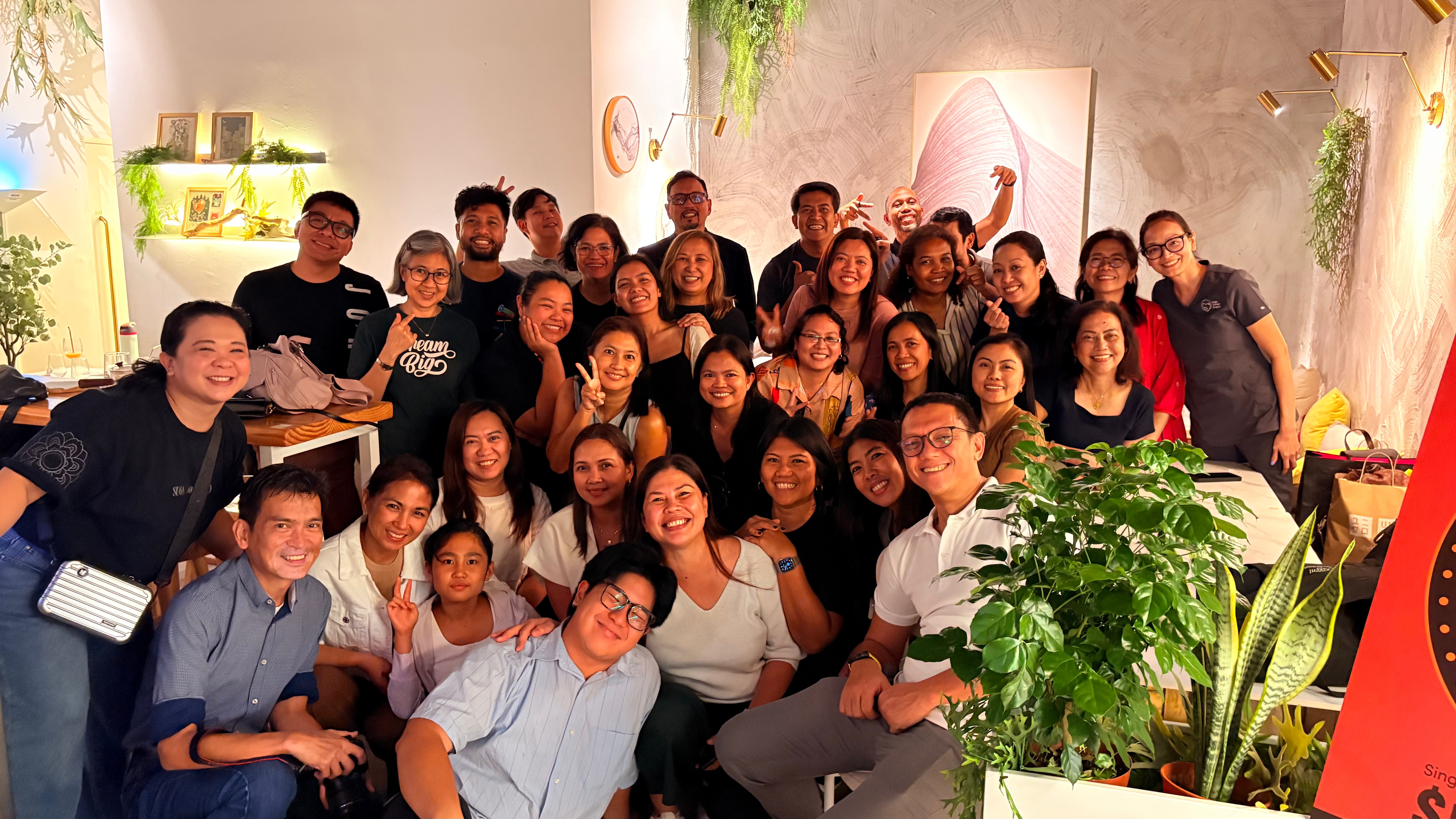
Last night, after celebrating Mosaic’s 19th anniversary, we gathered again for a special thanksgiving night. It wasn’t a night of programs, but a time of full tummies, open hearts, stories shared, and gratitude rising from every corner of our community.

What LIKHAYAG Means

Our theme this year, LIKHAYAG, is a word we coined and it carries the heart of who we are becoming.

  • LIKHA – to create, the handiwork of God. As Ephesians 2:10 reminds us, “For we are God’s workmanship, created in Christ Jesus to do good works…” We are His masterpiece, shaped with purpose.
  • KAHAYAG – a Visayan word for light or sinag, the radiance that breaks into darkness.
  • HAYAG in Tagalog – to proclaim, to make known, to reveal.

Put together, LIKHAYAG is a declaration: We are created to shine, to live as God’s handiwork, and to proclaim His light and love in the world. And this was exactly what Thanksgiving night reflected, stories of God’s light made visible through His people.

Stories of Gratitude

A few of us shared their own Likhayag stories. One of us shared how she went from helping brainstorm the theme to being entrusted with the design and souvenir booths. At first, she felt overwhelmed and don’t know if she can really do it. But she was grateful,  because in her weakness, she found strength in community. Others stepped in, and she realized she didn’t have to carry the work alone.

A dear brother who had been quiet for some time, suddenly found himself behind the camera for our anniversary. Not only did he capture moments that will be remembered, but he also rediscovered the joy of serving. In fact, he even found the camera lens he had long been searching for, suddenly available just in time. To him, it felt like God opening a door for him to return to service.

Two others were new in the ministry. One, totally new, served in the food ministry. Another had been longing for an opportunity to serve again after some time away. She finally found her place helping in candle-making. Both stories reminded us that no act of service is too small and that God always makes room for willing hearts.

There were more stories like these, each one unique, but together they painted the same truth: God moves even through our ordinary hands.

Thanks-Living

Our pastor’s short exhortation pierced deeply: a truly transformed life is marked by gratitude. And more than just words, gratitude is best shown through “Thanks-Living”,  living daily in a way that reflects how thankful we really are. He reminded us not to wait until people are gone before we appreciate them. Gratitude is meant to be spoken now, lived now, shared now.

The Song That Became a Prayer

The highlight of the night was when Coach NT sang “I Won’t Last a Day Without You.” A familiar love song, yes but in that moment, it became something more. It became a hymn of dependence on God, and a love letter to the people around us.

One line echoed in my heart:
“I can take all the madness the world has to give but I won’t last a day without you.”
And I realized, that’s Mosaic to me. That’s what ministry is for me. Without God and without this family He has placed me in, I wouldn’t last.

I found myself in tears because God reminded me: this is my to live for and to die for. This is LIKHAYAG, not a perfect work, but a radiant one, carried out by imperfect people who lean on a perfect God.

Serving isn’t easy. There are struggles, disappointments, even moments when I want to give up. But at the end of the day, I always return to this calling. And I know deep in my heart, I would not exchange this life for anything else. Because this is what it means to be LIKHAYAG: created to shine, created to proclaim, created to live in gratitude

“Give thanks in all circumstances; for this is God’s will for you in Christ Jesus.” – 1 Thessalonians 5:18

LIKHAYAG – Lumikha. Magliwanag. I-HAYAG!

A Life That Sings

“Worship is not just a sound we make; it’s a life we echo.”

I had the privilege of walking closely with a dear brother in church – Kuya Joel – during the last five months of his earthly life. It was a journey marked by pain, yes, but overwhelmingly filled with worship, love, and unwavering faith.

I saw with my own eyes how his physical body was fading, how cancer slowly took its toll. But even as his strength dwindled, his spirit did not. With every ounce of energy left in him, he still chose to sing. I can still recall how he raised his trembling hands during worship, his voice cracking, yet fully surrendered. He worshipped with everything he had until the end.

While preparing for his wake service, my nephew Ken stumbled upon a video that made me pause and weep with deep admiration. In it, Kuya Joel was teaching his two children, SJ and Skye, to sing and play the song Heart of Worship. That clip wasn’t just a beautiful memory, it was a testament. Worship wasn’t something he started doing when he got sick; it was how he lived all along. He was intentional about it, modeling it daily for his kids, not just in music but in how he lived.

Now, SJ and Skye serve on the worship team, carrying the torch their father handed to them. And at the wake, the two stood boldly and sang Heart of Worship, the same song their dad had taught them just before giving their eulogies. It was more than a tribute. It was a powerful picture of a legacy passed on.

Here’s the video that says more than words ever could:

What I’ve Learned

Kuya Joel taught me without saying it that worship isn’t just a song. It’s a life poured out.

It’s seen in how he served the church quietly but wholeheartedly.
It’s seen in his excellence at work and his humility in every role.
It’s seen in the way he loved his wife and raised his children.
It’s felt in the joy that radiated from his face even in great pain.

And so I pray, after witnessing his life, Lord, may I also live a life of worship till the end.
Not just with music and melody … but in how I serve, how I love, and how I give my all even when I have little left.

“As long as I live, I will sing and praise you, the Lord God. I will be true to you.” – Psalm 146:2 (CEV)

The Sand Beneath Our Feet

You’re Not Stuck Yet … But You Will Be
Temptation doesn’t always come loud or strong. Sometimes it just waits for you to stay long.

Day 1 of our Bali trip, and we decided to take a relaxed walk through the Seminyak area, eventually arriving at Seminyak Beach. I didn’t expect a spiritual lesson while walking along the shoreline, but life has a way of slipping truth into the most unexpected places.

We were simply enjoying the breeze, the sun dipping low into the horizon, the rustling sound of the waves, and the softness of the sand, until we stumbled upon a patch that felt strangely different. It was moist, and while we were just playing around with our bare feet, we noticed something odd … our feet were slowly sinking.

It felt like quicksand … not the dramatic kind that swallows you whole in an instant, but something that felt alive. Even while standing still, I could feel the earth gently but persistently tugging at my feet.

We laughed. It wasn’t dangerous … we knew that. But still, it was bizarre. I stood in one spot for a while, curious. And then, it got real. I felt my legs sinking past the ankle, reaching the mid of my shin. The sand tightened … for real. My calves felt wrapped in something cold and unyielding. We were still laughing about it and so fascinated when I saw across me Lester was already almost past mid-shin sunken in the sand and just told everyone to get off. It’s fun (and a little eerie), and honestly, it’s a great metaphor too … something that seems solid but slowly pulls you in when you stay still too long.

Later that night, back at the villa, we were recounting the day’s highlights with Ken and Dina, who weren’t able to join us. As we shared the “quicksand moment,” Dina said something that struck a chord: “That’s exactly what temptation feels like.”

She was right.

That is what temptation feels like. Temptation doesn’t always scream danger. It often comes dressed in comfort. It starts soft. Innocent. Maybe even fun. You think you’re in control, that you can just try it and step away whenever you want.

Until you can’t.

Temptation is just like that sand.
Like that sand, temptation doesn’t pull you in all at once. It looks harmless, normal even. But the longer you stay, the more it grips you. And the more you try to fight it on your own, the tighter it gets

Dina reminded us of something our senior pastor once said :

“It is easier to avoid temptation than to resist it.”

I already know this but it made so much sense as I recalled how I felt the sand slowly claim my legs that day.

And Scripture backs that up. Joseph knew it too.

When Potiphar’s wife tried to seduce him, he didn’t flirt with the line. He didn’t argue. He didn’t try to “stand his ground.”

“But he left his cloak in her hand and ran out of the house.” — Genesis 39:12

He RAN.

The Apostle Paul echoes the same wisdom in the New Testament:

“Flee the evil desires of youth and pursue righteousness, faith, love and peace, along with those who call on the Lord out of a pure heart.” — 2 Timothy 2:22

Don’t fight it. Flee it.
You’re not weak for running. You’re wise for refusing to stand where the ground is not safe.

Here are 3 truths I’m holding on to after that beach moment:

  • Temptation often looks harmless at first.
    That’s why awareness is key. Don’t stand where you’re not meant to.
  • The longer you linger, the harder it is to escape.
    What seems manageable now can suffocate you later.
  • The wisest move is not resistance, but distance.
    Don’t argue with temptation—outrun it.

So the next time you find yourself near something that feels “off,” remember this:
You don’t need to prove how strong you are.
You just need to stay where the ground is solid.

Wicked Truths: The Side of the Story We Never Hear

I recently watched Wicked for the second time. And it still, exceeded my expectation. The visuals were dazzling and had my heart pounding. The songs especially Unlimited and Defying Gravity had me smiling like it was the first time. And the lines? Even wittier, even sharper than I remembered.

I walked into the theatre expecting entertainment with maybe a sprinkle of  The Wizard of Oz nostalgia. What I didn’t expect was to walk out with a journal full of questions about human nature, courage, and the stories we choose to believe about others, and ourselves. It left me holding a mirror up to my own heart. Because more than the green face paint and broomsticks, Wicked is a story about perception, prejudice, power, and most of all TRUTH.

Here are the reflections that stayed with me long after the curtain closed.

Born This Way?
One of the most striking questions raised in the play is: Are people born wicked? Or do they have wickedness thrust upon them?
It’s haunting, but also liberating to consider that we are born with a clean slate. Innocent. Curious. Capable of great love and great light. And yet through judgment, rejection, misunderstanding, then white starts turning into gray. What starts out pure slowly distorts.

Elphaba wasn’t wicked. She was simply different. And that was enough for the world to turn against her.

The Power of Being Seen
There’s a moment when Elphaba unintentionally unleashes her powers, causing a stir in the classroom. People are scared. But instead of punishing her, her teacher sees something else: TALENT.

It hit me hard. Because how often do we confuse unfamiliar with dangerous? How we silence the extraordinary because it shows up in ways we don’t expect.
All it took was one voice to say, “You have something special.” And in that moment, Elphaba’s life takes a new direction. Sometimes, that’s all it takes, to be seen, to be spoken to. It’s a quiet nudge to all of us. Never underestimate the power of being seen. Never underestimate the power our words hold to another life.

Unlimited: A Song, A Mindset
“Unlimited. My future is unlimited…”
It’s more than a lyric, it’s a reminder.

Our past does not define the ceiling of our future. Even when others try to limit us, even when we doubt ourselves, there is always space to grow beyond what’s been written for us.
Believing in what’s possible is where transformation begins.

Dr. Dillamond : When Voices are Silenced.
“If you make it discouraging enough, you can keep anyone silent.” — Dr. Dillamond, Wicked

The talking goat professor, Dr. Dillamond, finds himself gradually silenced. His very identity is threatened, and eventually, he’s removed from his position.

It’s subtle, yet painful. Discouragement doesn’t always shout, it often whispers. And when the system repeatedly tells someone they don’t belong, the easiest thing to do is to fade away. Sometimes, oppression doesn’t come as a roar. It comes as a whisper that tells us to keep quiet, play small, or stay in line.

When discouragement grows loud enough, it can muzzle even the wisest voices.

His story is a warning: when voices are quieted, we all lose a bit of our collective wisdom.

The Wizard and the Trap of Applause
The Wizard of Oz wasn’t evil, per se. He was just caught. Caught in the facade. Caught in the praise. Caught in the version of himself that others believed in.

When people told him he was “wonderful,” he didn’t correct them. He leaned into the illusion, because who wouldn’t want to be adored? Eventually, the illusion swallowed him whole.
It’s a cautionary tale for any of us chasing approval. It’s dangerously easy to become a prisoner of the persona we create to please others. And I’m reminded … I only need an Audience of One. I don’t need the applause of many or anyone because I have Him who knows me. His applause is louder than any uproar. Whenever I feel the pull for approval, I return to this truth: I don’t need to be loud to be seen by the One who truly knows me. This song keeps me grounded :

I don't need my name in lights
I'm famous in my Father's eyes
Make no mistake
He knows my name
I'm not living for applause
I'm already so adored
It's all His stage
He knows my name
oh, oh
He knows my name oh, oh


I'm not meant to just stay quiet
I'm meant to be a lion
I'll roar beyond a song
With every moment that I've got
True to who You are
You saw my heart
And made
Something out of nothin
g
- He Knows My Name by Francesca Battistelli

Defying Gravity: The Courage to Rise
Of course, Wicked’s most iconic anthem is Defying Gravity. And it’s not just a song about flying, it’s about rising.
Rising above judgment.
Rising above fear.
Rising above who the world says you’re supposed to be.

It’s that defining moment we all face at some point where we stop waiting for permission and choose to live truthfully, even if it means flying solo.

The Other Side of the Story
But if there’s one takeaway that truly left an imprint on me, it’s this:
There is always another side to the story.

Elphaba was labeled as “wicked,” but the truth never made it to the spotlight. Her reputation was built on lies, her actions twisted by those in power. And it makes you wonder … how many people in real life are living under labels they never asked for?

How many “villains” are just misunderstood?
How many “outcasts” are simply walking a different path?

It reminded me that judgment is easy but context is everything. Behind every story is another version waiting to be heard. And behind every person is a history we don’t see.

So maybe the question isn’t “Is she wicked?”
Maybe it’s: “What don’t I know yet?”

Wicked isn’t just a reimagining of Oz. It’s a challenge. A call to question how we define good and evil, how we treat those who are different, and how quickly we accept one version of the truth.
And maybe that’s what Wicked ultimately teaches us:
That truth isn’t always what’s seen. That judgment is often louder than understanding.
And that the most radical thing we can do is pause, lean in, and look again.

Because behind every label is a life.
And behind every “wicked” face is a story still unfolding.

And maybe, just maybe, the most courageous thing we can do is to defy the gravity of assumption and CHOOSE COMPASSION instead.

Let these words remind us:

“The Lord does not look at the things people look at. People look at the outward appearance, but the Lord looks at the heart.”
1 Samuel 16:7 (NIV)

Strangers, Strengths, and “I Love You’s”

From First Meet to Family in 48 Hours

It was a short weekend. Blink, and it passed. But it’s the kind that lingers long after the goodbyes.

A group of friends, some of them strangers to us just days ago, flew in from Cebu for a quick visit. Some of them were first-timers in Singapore. You’d think they’d spend their first day exploring the sights. But no. Their first stop? A quiet hospital room, visiting one of our own who had been confined. They didn’t know him personally, but it didn’t matter. Somehow, in a room filled with strangers, it felt like family. Love has a way of cutting across introductions.

That moment struck me. When people share a common heart for something bigger than themselves, it doesn’t take long for connection to happen. It’s like skipping the small talk and jumping straight to the part where you feel safe, seen, and supported.

Throughout the weekend, stories flowed about joys, struggles, and the small victories of everyday life. Each outreach, each little pocket of people from different cities, has its own share of challenges. But in the sharing, there was learning. In the listening, strength. What one group is strong at becomes a light for the other. What one is weak in becomes a shared prayer. And just like that, each calling, each community, gets a little more fortified.

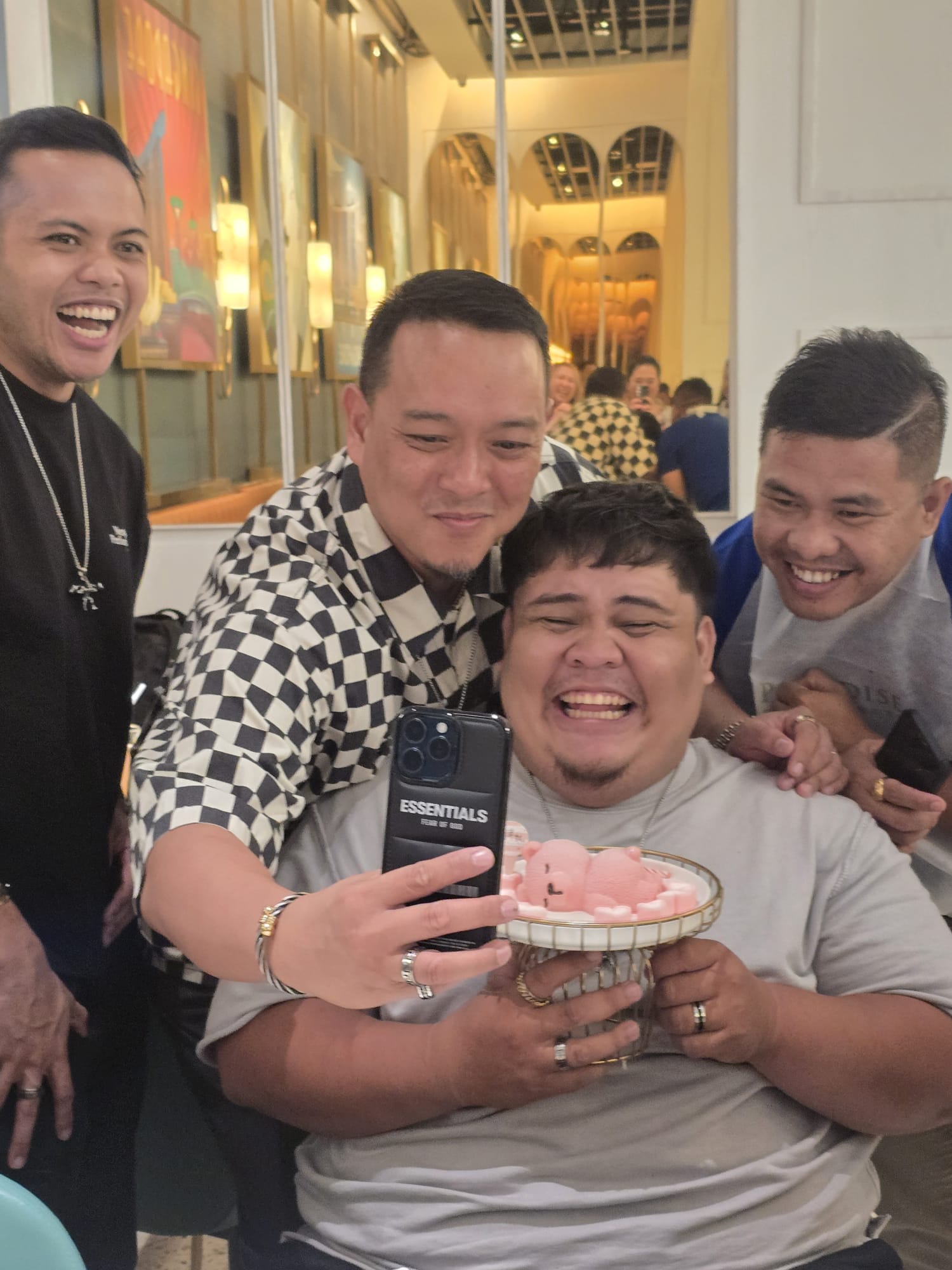
And then there’s the men from the Cebu team. What a surprise they were. Loud, fun, full of life, and full of love. They teased one another, hugged without hesitation, and ended their conversations with “I love you.” I watched, quietly amused, then deeply moved. It’s rare to see that kind of brotherhood. Rare, and beautiful. It made me wonder: if more men loved this openly, how different would our families be? our communities be? our world be?

So yes, it was a short weekend. But it packed something big. It reminded me that people don’t have to journey together long to matter to one another. Sometimes, all it takes is a shared purpose, a little vulnerability, and the courage to say, “I’m here for you,” even if we just met.

And maybe, just maybe, say “I love you” while we’re at it.

Because at the end of the day, what binds us is love … GENUINE, UNSELFISH, and ENDURING.


As the Scripture reminds us:

“By this everyone will know that you are my disciples, if you love one another.” —John 13:35

The March That Mattered

A reminder that marching on is not just one bold move, but many small, faithful ones.

Before 2024 ended, my friends and I asked ourselves a simple but powerful question: “What will your 2025 headline be?” It was our way of manifesting what we wanted to see ourselves achieving in 2025. Mine was: “From holding back to marching on.” Bold. Hopeful. Scary.

You see, I had dreams tucked away for too long, one of which is stepping into professional speaking, a passion rooted in my desire to inspire and encourage others. After joining the Get Paid to Speak bootcamp, I felt like I had finally taken the first step. I imagined speaking in workshops or conferences, writing a book or even a shallow but equally big dream of emceeing a fan meet … Dreams that once felt distant now seemed within reach.

But then came the whispers:
“Can I really do this?”
“What do I have to offer?”
The familiar hesitation returned, dressed up as busyness and doubts. Until one day, just before the new year, I told myself:
“Enough. I have to march on.”

I declared 2025 as the year I’d finally start … intentionally, courageously.

Then January passed. February. And in a blink, Q1 was over.
Work picked up speed.
Travel came back into the picture.
My Wednesday prayer nights often clashed with meetings and commitments.
It felt like the stars weren’t aligning.
Not yet.

Tonight, at our Wednesday prayer night, we were asked:
“What’s your biggest answered prayer for the first quarter?”
For a moment, I couldn’t think of anything.
Time flew by. What did I accomplish? Did I even move?
And then I remembered March.

A group of students, aged 14 to 18, visited from a school in the Philippines. I was invited to speak to them – no formal topic, just a short talk about being a “Global Filipino.” And as I stood there, sharing my heart with these young dreamers, I felt something sparked within me once again … JOY. PURPOSE. FIRE.

It hit me … this was it.
This was an answered prayer.

Because more than just being able to speak, I had the opportunity to inspire. Not just to push them toward worldly success, but to question the “why” behind their dreams. I reminded them that being a Global Filipino isn’t just about how far you can go but how many people you uplift along the way.

That same Sunday, we brought these students to Lucky Plaza to meet our fellow Filipino OFWs. I watched their eyes open to the pain, strength, and sacrifices of our kababayans. That encounter didn’t just move them, it inspired them and deepened their dreams.

To cap off March, I took a trip to Hong Kong with friends, and once again found myself in the heart of Central, surrounded by hardworking OFWs, each one with a story, a sacrifice, a hope. I carried with me a quiet ache and a growing question: How can we help our kababayans here too?

So here I am, closing Q1 of 2025 with no big speeches.
No emcee gigs.
No book launch.
None Yet.
But I am grateful. Because maybe this quarter wasn’t about doing something grand,
but about remembering why I wanted to start in the first place.

My heart still beats for people.
And in a fast-paced world like Singapore, where it’s easy to grow numb, that alone is a gift.
To still feel.
To still care.
To still long to serve.
From holding back to marching on … maybe that’s not just a one-time leap, but a step-by-step journey.
And this was my first step.
A reminder that marching on is not just one bold move but many small, faithful ones.

As I reflect on this journey, I’m reminded that even the quietest acts of obedience matter. That our not-yets still hold purpose. And our small yeses, strung together, can move mountains. Because in the end, it’s not always about how far we’ve gone but that we’ve chosen to begin and to keep going. Even if we don’t see the full picture yet. Even if the timing feels off or the path still feels unclear. What matters is that we move. In faith. In love. With purpose

As one wise voice once said:
Take the first step in faith. You don’t have to see the whole staircase, just take the first step.”Martin Luther King Jr.

And in those steps especially the quiet, unseen ones, we hold on to this promise:
“And let us not grow weary in doing good, for at the proper time we will reap a harvest if we do not give up.”Galatians 6:9 (NIV)

One Sunday in Hong Kong : Karton, Kwento, Kabayan.

Banig ang kama. Karton ang dingding. Kalye ang tahanan.

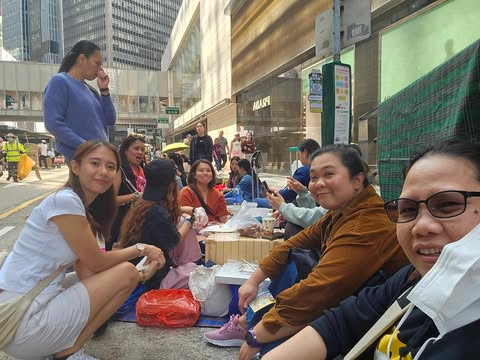
It may sound poetic, but this is not a metaphor. This is the literal Sunday reality of many of our kababayans in Hong Kong, our dear Filipino domestic workers whose day off is spent on sidewalks, beneath tall skyscrapers and luxury malls, forming makeshift ‘homes’ just for a day of rest and belonging and to feel home.

I recently went to Hong Kong, not as a tourist but as a friend, listener, and burden-bearer. The trip opened my eyes wider than ever before. I’ve seen Filipinos everywhere (coz we are practically everywhere), Singapore, the Middle East, Europe, but something about Hong Kong broke my heart in a different way.

It all began with a dream. not mine, but a friend’s.

Yayie, who once lived and worked in Singapore, reached out to us with a burden burning in her heart. She dreamed of starting a “high quality” agency in Hong Kong. not just to process paperwork, but to truly help and empower our kababayans. Her vision was deeper than logistics; it was about restoring dignity

We mentioned this to our life coach, who said something simple yet weighty:
“Sige na, gawin niyo na ‘yan. Ang tagal niyo na rin iniisip.”
That one sentence sparked movement.

Not long after, during one of the sessions in our Prayer & Fasting, Coach Albert shared about the work being done in Bicol. His message stirred something in me. It was missional, not just in geography, but in heart. Just like what we’ve been doing in Singapore – bringing the church to where people are.

And when my eyes met Dina’s, it was clear: we were thinking the same thing.
“Tara, book na tayo ng flight. Hong Kong na.”

We weren’t sure what would come out of this. There was no big program, no formal agenda. We simply wanted to catch up with friends. But deep inside, we knew we were also being led perhaps to see, to listen, and to carry a piece of our kababayans’ burden.

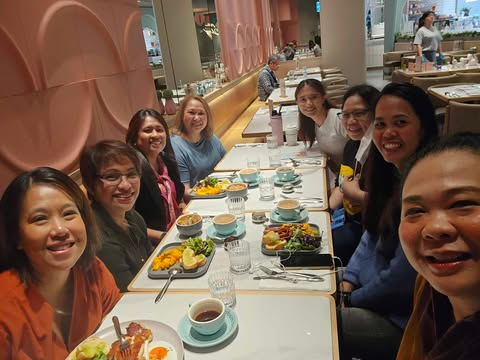
On our first morning in Hong Kong, we met with two old friends over breakfast. The hugs were tight, the tears came fast. It didn’t take long for the burdens to surface.

One of them, once a business owner and proud mother of a college graduate, is now back working as a domestic helper. Life back home took unexpected turns, covid killing the business, financial loss, illness,  and the need to start over. Her story, like so many others, was layered with quiet strength and quiet heartbreak

But more than the details of their past or present, what struck me most was the emotion, raw, unfiltered, and very real. The pain of being misunderstood by employers. The deep loneliness. The fear of sudden contract terminations without recourse. The weight of having to provide for a family while enduring verbal abuse and being made to feel small.

There were phrases I heard that still echo in my mind:
“Durog na durog ang pagkatao ko.”
“Wala ka namang laban.”
“Kailangan kong tiisin.”

Sometimes, it’s not even the physical labor that’s the hardest. It’s the emotional wear and tear, the quiet erosion of one’s dignity.

Between Skyscrapers and Cardboard Walls.

Sundays in Hong Kong are different. Especially in Central. The streets transform not into markets or festivals but into makeshift neighborhoods. Folded cardboard becomes flooring. Banigs are unrolled like red carpets. Umbrellas and boxes become walls. And amid the towering silhouettes of Dior, Louis Vuitton, and glassy malls, our kababayans sit cross-legged on concrete, eating packed meals, getting haircuts, painting nails, doing each other’s makeup. Laughing. Singing. Resting. Trying to experience the feeling of being at home.

It’s their day off. the day when the helper becomes her own person again, even if just for a few hours.

And yet, the contrast is jarring. Right in the heart of luxury, our people settle on the streets. Not by choice, but because there’s nowhere else to go. They say it’s not illegal to enter malls, but there’s a quiet message that whispers, “You don’t belong here.”

We walked along the closed-off streets, where the government had designated a space just for them. In a way, it felt like a gift. But in another way, it felt like a boundary line … “You can stay here, but don’t go beyond.”

Inside Worldwide House, the unofficial Filipino center, the atmosphere was electric and overwhelming. Crowds. Shouting. The hustle of side hustles – food, accessories, anything you can sell. It felt like a market and a neighborhood rolled into one. And yet, something in me quietly ached.

Twenty years ago, when I first visited Hong Kong, I had seen scenes like this. I thought things might’ve changed. But nothing much has. If anything, there are more people now. And deeper stories behind every smile.

It looked like joy, and maybe it was. But it also looked like survival dressed up in Sunday best.

Joy or Resignation?

At first glance, it felt like a celebration.

There was laughter, food, music, and a sense of togetherness that was undeniably Filipino. It reminded me of Sundays in Singapore too, our kababayans laying out mats, sharing meals, trading stories. But something about Hong Kong struck a different chord.

It felt heavier. Louder. And strangely, lonelier.

As we sat with some of the women, I noticed their eyes, they sparkled when they talked about shopping, video calls with their kids, and the dollar exchange rate. “Okay naman kami dito,” one said. “Masaya naman. Malaki sweldo.”

And yet I couldn’t shake the question in my heart:
Is this happiness? Or is this what happens when hope gets boxed up like the balikbayan boxes they pack every Sunday neatly taped and tightly sealed?

Maybe we’ve learned to celebrate just to survive. Maybe the laughter is real, but so is the exhaustion, the pain that’s too deep to put into words. Maybe some of us have accepted that “ito na kami.” This is what life is now. Earn, send, survive, repeat.

But what if it’s not supposed to stop there?

One of our friends said something that pierced me: “Ate, wala naman kasing ibang nadidinig.” Probably no one’s telling them there’s more. Probably no one’s reminding them that they’re not just workers, but women of worth. Not just survivors, but dreamers. Not just remittance senders, but nation-builders, whose dignity shouldn’t be traded for dollars.

And so we walked. We listened. We laughed. We sat on sidewalks and in stuffy corners. We took it all in, the noise, the numbness, the reality of it all. We didn’t have answers. We didn’t go there to fix anything.

When the noise faded and the day wound down, what remained was a gentle nudge in my heart … a soft whisper that this mattered. That they mattered.

I left Hong Kong with a full stomach, oh yes! we did eat well, so well!. But more than that, I left with a full heart. Full of stories. Faces. Tears. Laughter. And questions I still can’t answer.

I didn’t come home with a strategy. I came home with a seed.
A seed of longing.
That somehow, someday, we can help.
That maybe, one day, the little things we carry, our skills, our connections, our faith, our presence can be planted in the lives of our kababayans who feel stuck in survival.

I don’t know what that will look like yet. I don’t know how, or when, or with whom. But I carry the hope that what we saw and felt in those streets and crowded corners was not the end of the story. Maybe it was just the beginning of one.

For now, all I can do is pray.
And dream.
And believe that when the time is right, we will put hands and feet to the dream. Maybe not all at once. But one step. One heart. One life at a time.

One life at a time.

“For the vision is yet for the appointed time; it hastens toward the goal and it will not fail. Though it tarries, wait for it; for it will certainly come, it will not delay.” – Habakkuk 2:3


Love in Friendship: Growing Through Disagreements

Friendship? … It’s like family, minus the shared DNA but with all the drama. We don’t get to choose our families, but we do choose our friends. And yet, just like siblings, real friendships don’t exist without seeing the good, the bad, and sometimes even the worst in each other.

When it’s Wednesday, it’s another night of bonding with my church community and tonight we had an open discussion on how we can improve our service. One of the strongest points that came up wasn’t about doing more, it was about strengthening our relationships first. We realized that when genuine friendships are built, even criticisms become easier to accept because they come from a place of trust and love.

When it’s Wednesday we EAT. PRAY. LAUGH.

Disagreements are inevitable. It’s not a question of if they will happen, but WHEN. The real test of any relationship whether in ministry, family, or friendship is not in avoiding conflicts but in how we walk through them. Growth happens when bonds are tested by fire, and what remains is something stronger, refined, and more resilient.

I know this firsthand because of two people – Dina and Jane. They are my constants, my battle-tested friendships, the ones who have walked with me through life’s fire and emerged stronger with me on the other side.

Friendships That Endure Fire

Dina and I? We don’t always see eye to eye. In fact, we’ve had our fair share of disagreements, even full-on fights over different perspectives. But no matter how intense our discussions get, there’s one unshakable truth … we are there for each other. At 2 AM, when life feels heavy, I know she’s just one call away, and she knows the same about me.

Then there’s Jane. At one point in our lives, she just stopped talking to me. No explanation, no warning, just silence. And at that moment, I felt it was so unfair. I wanted to reproach “ I don’t deserve to be shut out like this!” But instead of demanding answers, I chose to stay quiet and let time pass.

One day, out of the blue, we started talking again. We both happened to be INFJs, and in a completely unplanned way, we found ourselves opening up about what had happened. No accusations, no bitterness, just understanding. And just like that, the friendship that had gone silent found its voice again. Through thick and thin, we have each other. She is my mirror when I have a blind spot, and I am the same for her.

There’s this common belief that strong friendships are always easy. But the truth? Love in friendship grows because of disagreements, not despite them.

Friction That Strengthens, Not Weakens

Think about the closest friendships you have. Chances are, you’ve had moments of frustration – disagreements over plans, differing opinions, even hurtful words said in the heat of emotion. Maybe there were days of awkward silence, moments when you wondered, Are we too different? But what makes a friendship real is not the absence of conflict but it’s the willingness to push through it.

Like siblings who argue over the silliest and the deepest things, we don’t always see eye to eye with our friends. And yet, those same tensions can refine the bond, shaping it into something stronger. A disagreement isn’t a sign of a failing friendship; it’s a test of how deep the love runs.

Honest Disagreements Mean Honest Love

When two people care enough to disagree, it means they care enough to be honest. It’s easy to walk away when things get uncomfortable, but REAL FRIENDS DON’T. They argue, they rant, they fight. However, they fight for the relationship, not against each other.

Love in friendship isn’t just about the fun times. It’s about seeing each other’s flaws, knowing each other’s weaknesses, and choosing to stay anyway. It’s about admitting when we’re wrong, forgiving when we’re hurt, and learning how to love better through every misunderstanding. It’s agreeing to disagree and disagreeing agreeably.

Friendships That Grow, Not Just Survive

The strongest friendships aren’t the ones that never face storms; they’re the ones that come out stronger because of them.

So the next time you have a disagreement with a friend, pause before assuming it’s a wedge between you. Maybe it’s just a growing pain, another chapter in a story of friendship that is built to last.

We choose the friends we make along the way, we choose to love, and we choose to love in spite of and despite everything. In the end, real friendship isn’t about agreeing all the time. It’s about choosing love again and again and again, even when it’s tested

“A friend loves at all times, and a brother is born for adversity.” — Proverbs 17:17