It was a short weekend. Blink, and it passed. But it’s the kind that lingers long after the goodbyes.
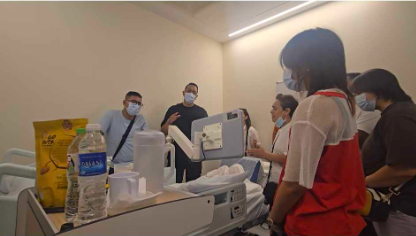
A group of friends, some of them strangers to us just days ago, flew in from Cebu for a quick visit. Some of them were first-timers in Singapore. You’d think they’d spend their first day exploring the sights. But no. Their first stop? A quiet hospital room, visiting one of our own who had been confined. They didn’t know him personally, but it didn’t matter. Somehow, in a room filled with strangers, it felt like family. Love has a way of cutting across introductions.
That moment struck me. When people share a common heart for something bigger than themselves, it doesn’t take long for connection to happen. It’s like skipping the small talk and jumping straight to the part where you feel safe, seen, and supported.
Throughout the weekend, stories flowed about joys, struggles, and the small victories of everyday life. Each outreach, each little pocket of people from different cities, has its own share of challenges. But in the sharing, there was learning. In the listening, strength. What one group is strong at becomes a light for the other. What one is weak in becomes a shared prayer. And just like that, each calling, each community, gets a little more fortified.
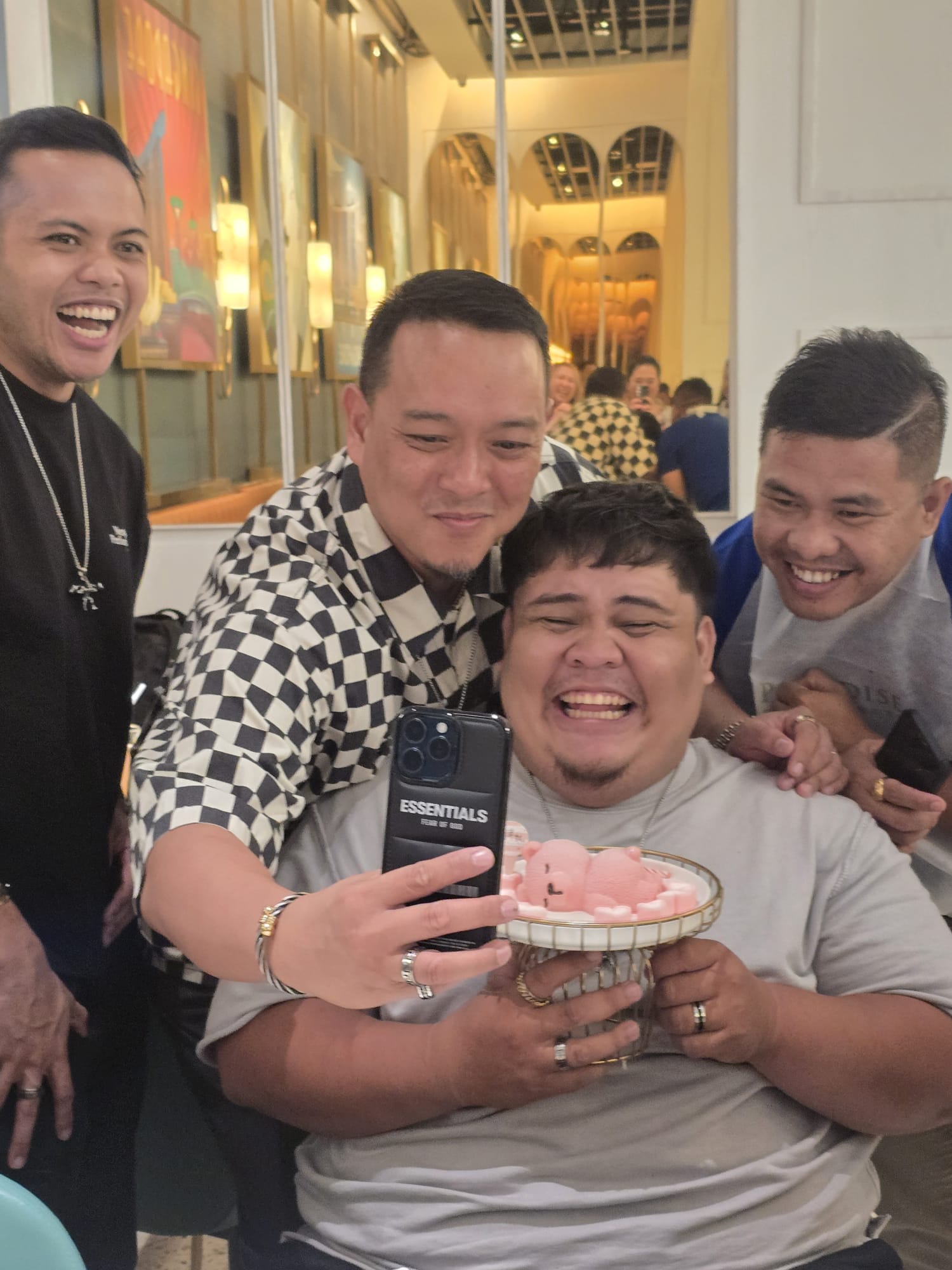
And then there’s the men from the Cebu team. What a surprise they were. Loud, fun, full of life, and full of love. They teased one another, hugged without hesitation, and ended their conversations with “I love you.” I watched, quietly amused, then deeply moved. It’s rare to see that kind of brotherhood. Rare, and beautiful. It made me wonder: if more men loved this openly, how different would our families be? our communities be? our world be?
So yes, it was a short weekend. But it packed something big. It reminded me that people don’t have to journey together long to matter to one another. Sometimes, all it takes is a shared purpose, a little vulnerability, and the courage to say, “I’m here for you,” even if we just met.
And maybe, just maybe, say “I love you” while we’re at it.
Because at the end of the day, what binds us is love … GENUINE, UNSELFISH, and ENDURING.
As the Scripture reminds us:
“By this everyone will know that you are my disciples, if you love one another.” —John 13:35
“Rain may pour as if it would sweep everything away. But once the sun starts blazing again, life rises again, no matter what.”
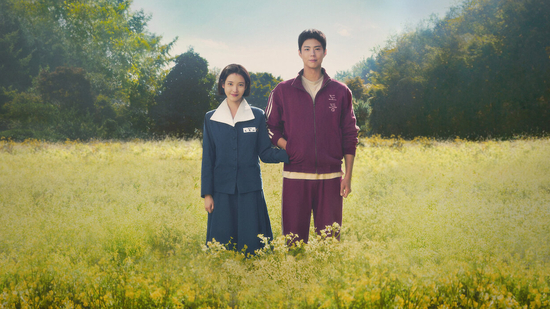
As a K-drama fan for decades now what really draws me to K-drama aside from the script, cinematography, OST, oppas and eonnies are the life lessons and reflective thoughts I get from watching them. There are dramas that entertain and then there are dramas that leave a mark, and When Life Gives You Tangerines left a deep imprint in my heart. It is one of those rare gems that wrap you in warmth while peeling open the tender truths of life. There’s just too many lessons this K-drama has reminded me but here are 12 lessons that most struck me, as sweet and tangy as the title suggest.
1. When Life Feels Like Drowning, Be Like a Haenyeo Life is hard. When you’re ready to give up, remember the haenyeo – women divers who face death every time they go to sea but find reasons to return. Ae Sun’s mother, before her passing, left behind these searing words:
“When your body’s tired and your heart wants to give up, there will be days when you want to give up on life. Refuse to back down. Fight to pick yourself back up. Take out a blanket and stomp on it. Till your soil. Go earn your money. If you tell yourself ‘I won’t die. I’m gonna survive,’ and use your arms and legs to push you up, you’ll get past the dark waters and finally see the sky. By then, you’ll breathe again.”
2. Community: It Takes a Village to Keep One Person Alive When Dong Myeong died, it wasn’t just his family that grieved, it was the whole village that stepped in. Neighbors cooked meals, fed the children, and quietly cared for the family in their lowest moment. The two elderly landlords, who had been secretly leaving food at their doorstep every night, reminded Ae Sun and all of us of this beautiful truth:
“No haenyeo goes diving by herself. When you’re about to lose breath in the deep, dark waters, you have to be near other divers. Otherwise, you won’t be able to breathe again. No one’s an island. Let’s go together. If you go with others, a hundred miles will feel like ten, my dear.”
These words hold a quiet power. We often pride ourselves on independence, but there will be seasons in life when we can’t stand on our own. And that’s okay. It doesn’t make us weak, it makes us human. We need people who can breathe with us when the waters are deep. We heal faster in the presence of community. We are meant to go through life together, not alone.
3. Breakups are more than endings
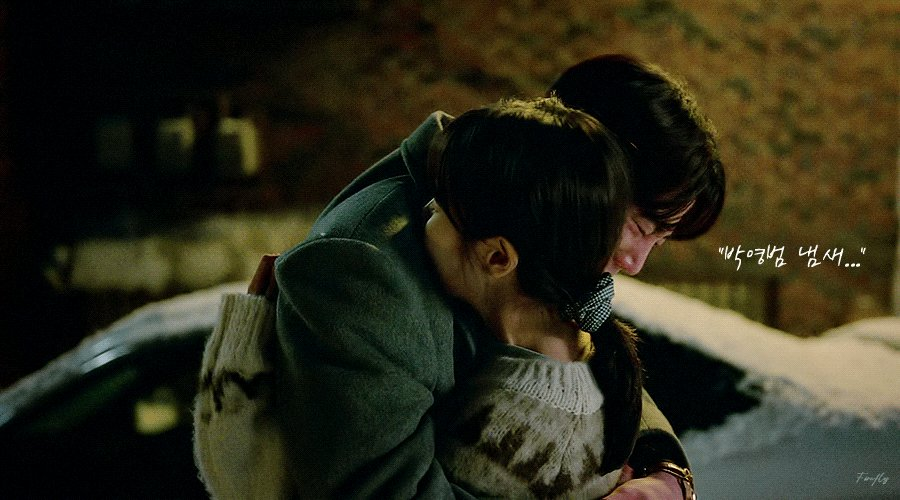
The breakup between Yeong Beom and Meum Gyeong wasn’t dramatic, it was painfully real and quietly brave. When Yeong Beom asked, “Is it because you don’t love me anymore?” Geum Myeong replied:
“I love you so much. I do love you deeply … but I love myself too.”
That line stopped me in my tracks. It wasn’t a lack of love that ended their relationship, it was the wisdom to recognize that love alone isn’t always enough. Geum Myeong saw how their future together might lead to resentment, not because of each other, but because of what they’d have to give up for the relationship. When Yeong Beom offered to leave his mother behind, Geum Myeong could have accepted but she didn’t. Because she knew doing so would slowly break his heart.
This moment was a powerful reminder that in relationships, it’s not just about how much we love each other. It’s also about how well we love ourselves and how mindful we are of what the other person needs to live with peace and wholeness. Sometimes, the most loving thing we can do is to let go before love becomes a burden or a regret.
4. Family Will Always Have Your Back Even when words fail, when tempers flare, when misunderstandings happen, FAMILY STANDS.
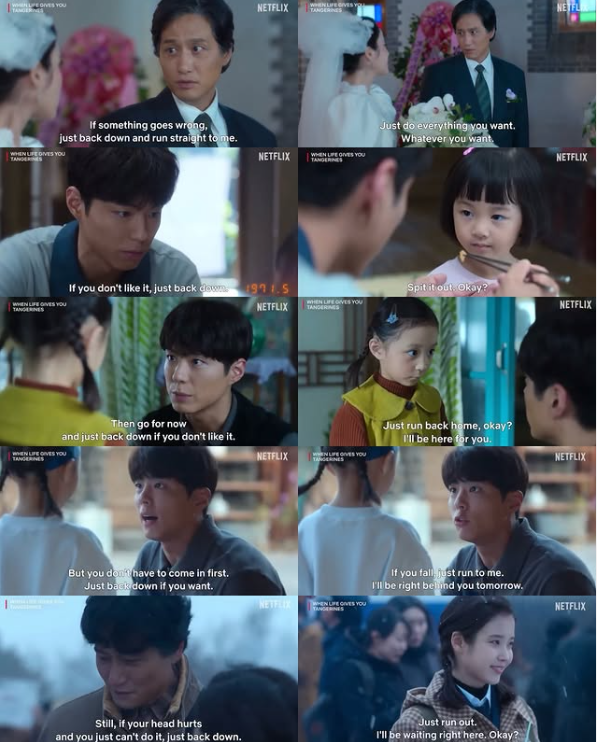
Throughout Geum Myeong’s life, her father Gwan Shik was her quiet anchor, never controlling, never demanding, but always present. Whether it was encouraging her to eat that unfamiliar vegetable as a child, cheering her on during her first day of school, supporting her passion for running, pushing her to pursue college, or standing behind her decision to get married, Gwan Shik was consistent in one message: “Go ahead. Chase what you want. And if you lose or give up, it’s okay, you can always come back to me.”
That kind of love is rare. It doesn’t trap you, it frees you. It gives you the courage to dream because you know that no matter what happens, you’ll never return to shame, you’ll return to open arms.
It reminded me of the father in the parable of the prodigal son, not only waiting, but running toward his child with joy. We may fall, lose our way, or back down from what we once hoped for. But family most especially a parent’s love remains a place of belonging, of grace, of return.
5. A Parent’s Love Always Finds a Way We often speak of a mother’s love as overflowing and it is. But this drama also beautifully portrayed the quiet, determined, and self-sacrificing love of a father. When Eun Myeong was wrongly imprisoned, Ae Sun didn’t hesitate to confront the mother of his business partner, the real thief, with boldness and fury. At the same time, Gwan Shik silently sold his beloved boat to help pay for the bail. Even Sang-gil, their arch-enemy turned Eun Myeong’s father-in-law, used his connections to uncover the truth and clear Eun Myeong’s name.
And later, when Gwan Shik saw his son struggling to regain dignity by selling rice cakes, he didn’t give him cash directly. Instead, he quietly asked Sang-gil to distribute money around the neighborhood so people would buy from Eun Myeong, allowing his son to keep his pride while still getting the support he needed.
That’s what struck me: parental love, both a mother’s and a father’s, is not only inexhaustible, it’s incredibly creative. It finds ways. Even when circumstances are against them, parents will exhaust every possibility, give up their last possession, or work behind the scenes to make sure their children get another chance at life.
It reminded me that true love doesn’t always show up with grand speeches, it often appears in quiet sacrifices and well-thought-out actions. Whether you’re winning in life or trying to start over, a parent’s heart is to lift you not with pity, but with dignity
6. Behind Rebellion Are Longings, Not Just Defiance At first glance, Eun Myeong came off as the typical “rebellious” son, distant, defiant, and constantly clashing with his family. But as the story unfolded, we saw the truth behind the attitude: he wasn’t rebelling to hurt his parents, he was aching to be seen.
His rough edges masked a tender heart. He wanted to succeed, not for pride’s sake, but to finally give back to his parents and ease their burden. Beneath his frustrations were unspoken longings, to be acknowledged, to be understood, to be enough. Even his harsh words were not hatred, they were guilt, grief, and love all tangled together.
And then there’s Geum Myeong. Outwardly the “good” child, yet even she found herself snapping at her mother often for fussing too much or scolding her father for waiting in the cold outside her apartment in Seoul. But again, it wasn’t real anger. It was her way of wrestling with the pain of watching her parents go above and beyond for her even when it hurt them. Sometimes it’s easier to react with irritation than to confront the heartbreak of knowing how much they sacrifice, all while feeling helpless to repay it.
This reminded me how often we, as children, speak carelessly to the ones who’ve sacrificed most for us. We scold, we pull away, sometimes even blame them, when deep down, we’re really angry at ourselves for not doing better, for seeing them give so much while we feel we’re giving so little.
Sometimes, what looks like rebellion is really just a cry to be noticed and loved in a way that speaks to our wounds. And more often than not, it comes from a place of deep love, love we don’t always know how to express.
7. Parenting Doesn’t Come With a Manual Raising a child is never straightforward. There’s no one-size-fits-all formula, no perfect script. Parents do their best with what they know and sometimes, that still leads to unintentional hurt.
There’s a tendency to favor the child who fits the mold: the one who excels in school, behaves “responsibly,” and makes parenting seem easy. Meanwhile, the child who struggles, who questions, who rebels, often gets misunderstood or overlooked. Yet, the truth remains. parents love all their children deeply. The expressions may differ, the understanding may fall short at times, but the desire is always to give them the best.
A compelling example is Yeong Beom’s mother. Her love for her son was real, undeniable, even. But that love, unchecked and unexamined, swung into control. She longed so much for her son’s success and stability that she crossed the line from guiding him to owning his life. In trying to hold on to him, she ended up breaking his heart. The result was a scar he carried for the rest of his days, a quiet regret that no one could heal.
Her story reminds us that even love can wound if it forgets to give space. Parents may mean well, but without balance and respect for a child’s individuality, love can feel like a cage instead of a refuge. In the end, parenting is a journey of learning, unlearning, forgiving, and trying again. And despite the mistakes, it remains a love that will always try to reach its children even if it stumbles along the way.
8. Love That Plans Even Beyond Goodbye Until his last breath, Gwan Shik’s thoughts were not on himself, but on Ae Sun, and how she would be after he was gone. He worried about her being alone in the hospital, unaccompanied and grieving. And so, even in his weakness, he gently made Geum Myeong promise: Take care of your mother. Be sweet to her.
But Gwan Shik didn’t stop there. In quiet, intentional ways, he left behind tokens of love, thoughtful, tender gestures that would carry on when he no longer could. He returned to Geum Myeong all the money she had sent him over the years, not having spent a single cent, his way of honoring her sacrifices and silently saying, “I saw everything you did for me.”
To Eun Myeong, he gifted the Mercedes Benz, an item that symbolized both their unspoken dreams. Gwan Shik never got to enjoy cars the way he once hoped, and Eun Myeong had dreamed of giving his father that very car. In the end, Gwan Shik made that dream come true for his son, fulfilling what both of them longed for in their own quiet ways.
And to Ae Sun, he left a fixed cupboard, an ordinary item made sacred by love. He knew she would face the world alone, so he left little anchors of care, hidden in the most practical of places.
It was all love. Not loud or dramatic, but deeply felt. Gwan Shik showed us that real love isn’t just in how we live with the people we love, it’s also in how we prepare to leave them, making sure they’re held, even in our absence.
9. Bu Sang-gil: A Rough Shell, a Redeemed Heart Bu Sang-gil is one of those characters who surprises you. On the surface, he’s rude, grumpy, and tough, cunning even. The kind of man you’d assume doesn’t care much, not even about his family. But beneath the harsh words and hard exterior lies a heart full of quiet care and hidden fears.
He hid the fact that he knew his wife was dancing, not out of neglect, but because he feared that confronting it would drive her away. His scoldings toward his children were just a front for the love he didn’t know how to express. He would sleep in the living room just to make sure his daughter returned home safely.
And when Eun Myeong, his son-in-law, was imprisoned, it seemed like Sang-gil did nothing by not giving money to bail him out. But in reality, he was working behind the scenes, bribing the police, using his connections, not just to get Eun Myeong out of jail, but to clear his name. It wasn’t about saving face; it was about saving a man’s dignity.
Sang-gil reminds us that some people love differently. Not everyone is expressive or affectionate. But love that hides in the shadows is still love. And when given a second chance, even the hardest hearts can show the deepest care.
10. When Guilt Becomes a Prison When we love deeply and bad things happen, we often carry a guilt that’s not ours to hold. Geum Myeong quietly bore the weight of believing her stubbornness led to her brother Dong Myeong’s death. Eun Myeong thought that if he hadn’t left his brother that day, he might still be alive. Ae Sun regretted not hugging Dong Myeong or stopping him from going out.
But perhaps the most heartbreaking was Gwan Shik, the steel of the family, who for 30 years buried his sorrow, believing that if he hadn’t gone out to build the retaining wall, his son would still be with them. He remained strong for everyone else, but inside, he imprisoned himself in guilt. And yet, the truth is, some things are simply beyond our control. The world is broken, life is fragile, and not everything that happens is because of what we did or failed to do
It’s right to take responsibility when needed, but we also need to learn how to forgive ourselves. To stop living in the grip of “what ifs” and begin walking in the grace of “even so.”
As Romans 8:1 reminds us: “Therefore, there is now no condemnation for those who are in Christ Jesus.”
We were never meant to carry the burden of guilt forever. Forgiveness, both from God and toward ourselves, is what sets us free. In love, we must remember: our humanity is not a failure; it’s the space where God’s grace meets us.
11. Living Fully, Even in Old Age Ae Sun’s conversation with Geum Myeong was one of my favorite, if not my MOST favorite scenes in the drama. When Guem Myeong asked her why she had to go back to the nursing home often. It came from a place of love and concern, after all to Guem Myeong her mother have been busy all her life and if it were her, she would just be relaxing and enjoying life.
But Ae Sun, with a spark still alive in her, answered with conviction that stirred something deep in me : “You need a calling in this world. It’s important at my age.” “I only go [to the nursing home] because I get excited doing that. So when I’m there, ‘Teacher Ae Sun’ is what I’m called. Basically, I’m moving up quite a lot in this world.”
She went on to recount the seasons of her life – from diver’s daughter and a crying child to an embarrassed bookworm, then a proud wife of a boat captain, finally a village chief’s spouse, sunk down again to fish market lady, then back up to a teacher at 70, and now, poet. Her joy was never in the titles themselves but in the meaning and memory each season carried. And she closed with a line that still echoes in my heart:
“You learn about life if you live through it. How shameful it would have been if I gave up on life. I’m so glad I lived all that I could.”
Ae Sun reminded me of Caleb in the Bible, who at 85 years old declared: “I am still as strong today as I was the day Moses sent me out… Now give me this mountain that the Lord promised me.” (Joshua 14:11–12)
Like Caleb, Ae Sun never saw age as a reason to retire from purpose. She shows us that as long as we have breath, we have something meaningful to give. We don’t just exist in old age, we can still conquer, still create, still contribute
12. Appreciate Life—Tangerines and All Life message that has resonated personally to me through this drama and the life of Ae Sun and Gwan Shik: KEEP GOING. DON’T GIVE UP. Even in hard times, life still offers sweetness. It might not come in grand gestures, it might come in a shared meal, a comforting pat on the back, a warm poem at seventy. You don’t always get the life you dream of, but you can choose to live your life with the same happiness as if you were living your dream.
Ae Sun and Gwan Shik’s life taught me that we don’t need to wait for perfect conditions to start truly living. We can gather the pieces, both the broken and the beautiful and still build a life that means something. Her story isn’t just hers. It’s a mirror of ours. And as I watched her live with purpose, with poetry, and with quiet joy, I found myself reflecting: maybe life isn’t about chasing a dream that looks a certain way. Maybe it’s about choosing to live fully, freely, and fruitfully, with whatever life gives us.
There are rough seasons, times when life feels like a raging storm, scorching summer heat, or freezing winter cold. But there are also quiet mornings, laughter over meals, second chances, and tangerines that taste like sunshine. Ae Sun and Gwan Shik’s story reminds us to savor them all.
Overall, When Life Gives You Tangerines reminded me that resilience isn’t always loud. Often, it’s quiet and steady. It’s in the daily acts of showing up, loving deeply, forgiving fully, and choosing to live even when life feels uncertain. Again, as Ae Sun said, “You learn about life if you live through it. How shameful it would have been if I gave up on life. I’m so glad I lived all that I could.”
And so I’m reminded of this promise: “They will still bear fruit in old age, they will stay fresh and green, proclaiming, ‘The Lord is upright; he is my Rock.’” – Psalm 92:14–15
Life may not always unfold the way we imagined, but it can still be fruitful. Still be beautiful. Still be worth living fully, gratefully, and with hope.



 A Doodle In A Day